Hickman’s Ultimate Spider-Man is Great, But is it Enough?
Marvel’s Ultimate Universe

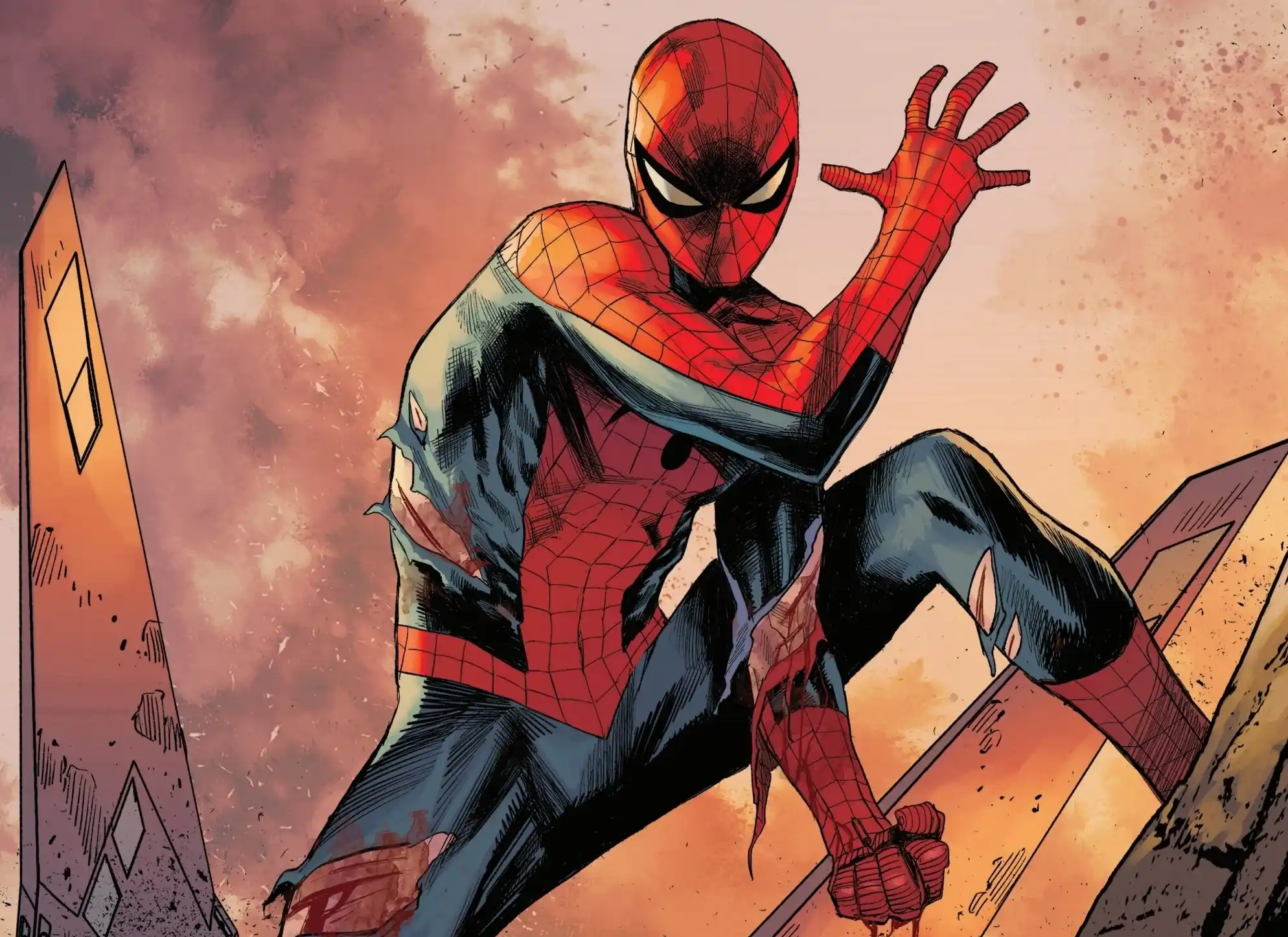
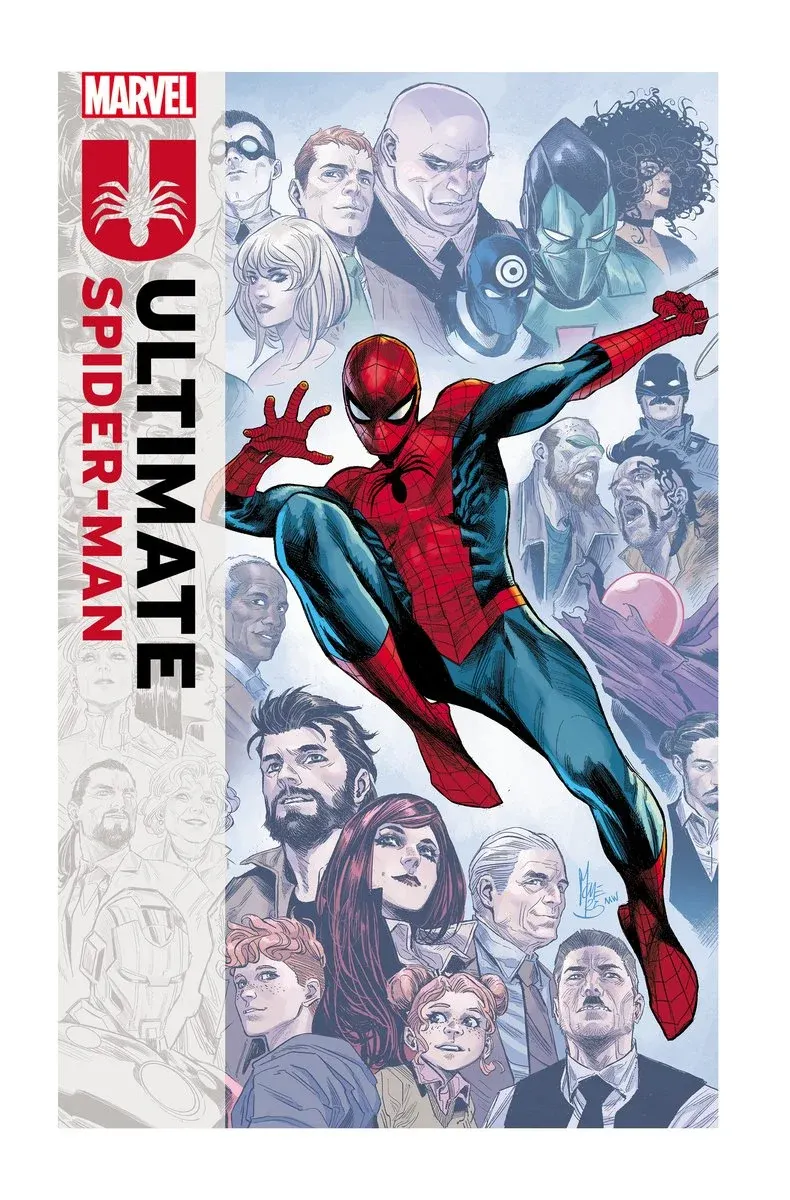
We have reached the apparent end of an Ultimate Spider-Man book, once again. For twenty-four issues over two years, this version of the series dominated conversations about Marvel comics, and the associated Ultimate Universe was only bested by Absolute DC in terms of the wider industry’s discussions. Award-winning and praised across the board in terms of writing and art, Hickman, Chechetto, and company’s work was often touted as the best Marvel had to offer at the time. Amazing Spider-Man, the counterpart series set in the main comic universe, was relegated to being the lesser book almost as soon as USM launched, and the positions never faltered. Fans of the character praised both a return to form in the storytelling of their favorite web-slinger, while also embracing the updated status quo and familial ties that were impossible, or unwanted, to foster in the original line. There is no real question, USM is a defining Spider-Man book that upended traditional expectations of the character, but is that enough to make a good comic?
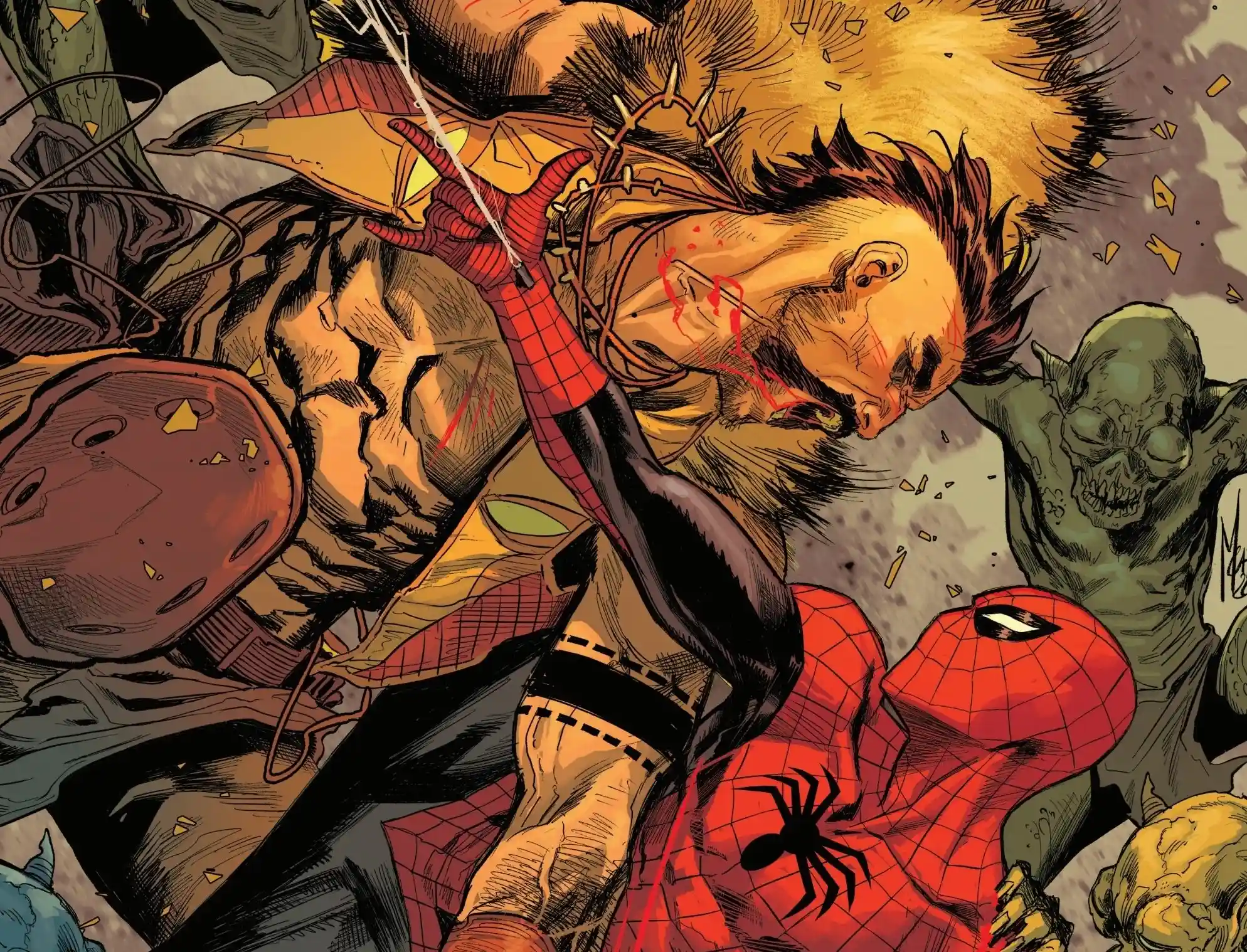
The final issues of Ultimate Spider-Man are focused on the Parker family and friends rallying together against the Kingpin and his Sinister Six. While the first half of the volume is some last-minute setup and shifting of plot pieces, the closing issues are a good old-fashioned direct assault on the Kingpin. The book continues to blaze its own trail in style and tone, but the actual conflict and resolution are not that different from those in any given Spider-Man comic. The creative team on USM demonstrates a complete understanding of superhero comic expectations and fulfills them at nearly every turn. It’s interesting, though, that even after hitting all its marks, there remain flaws in the book that betray some of the limitations of the usual framework for these types of comics.
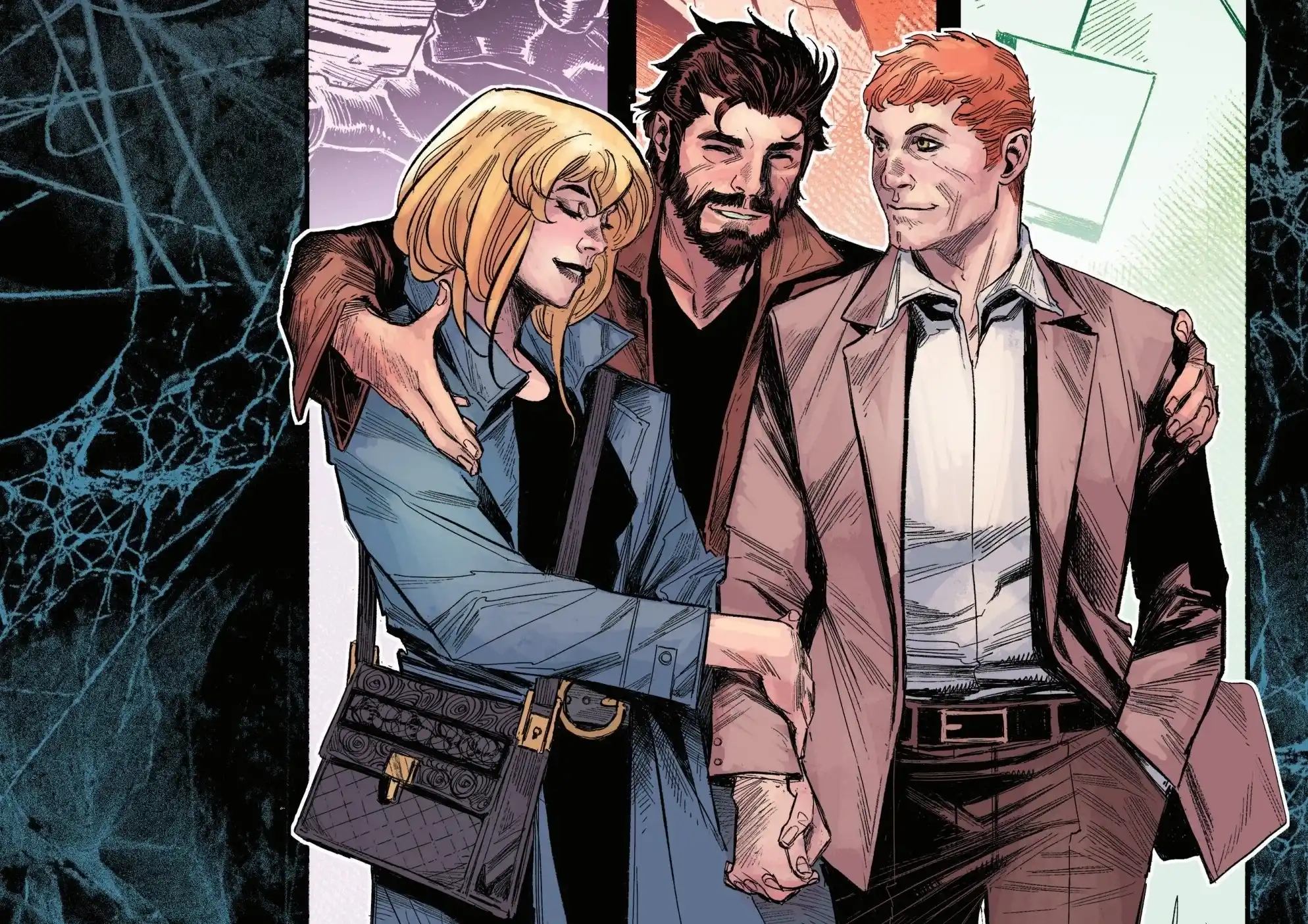
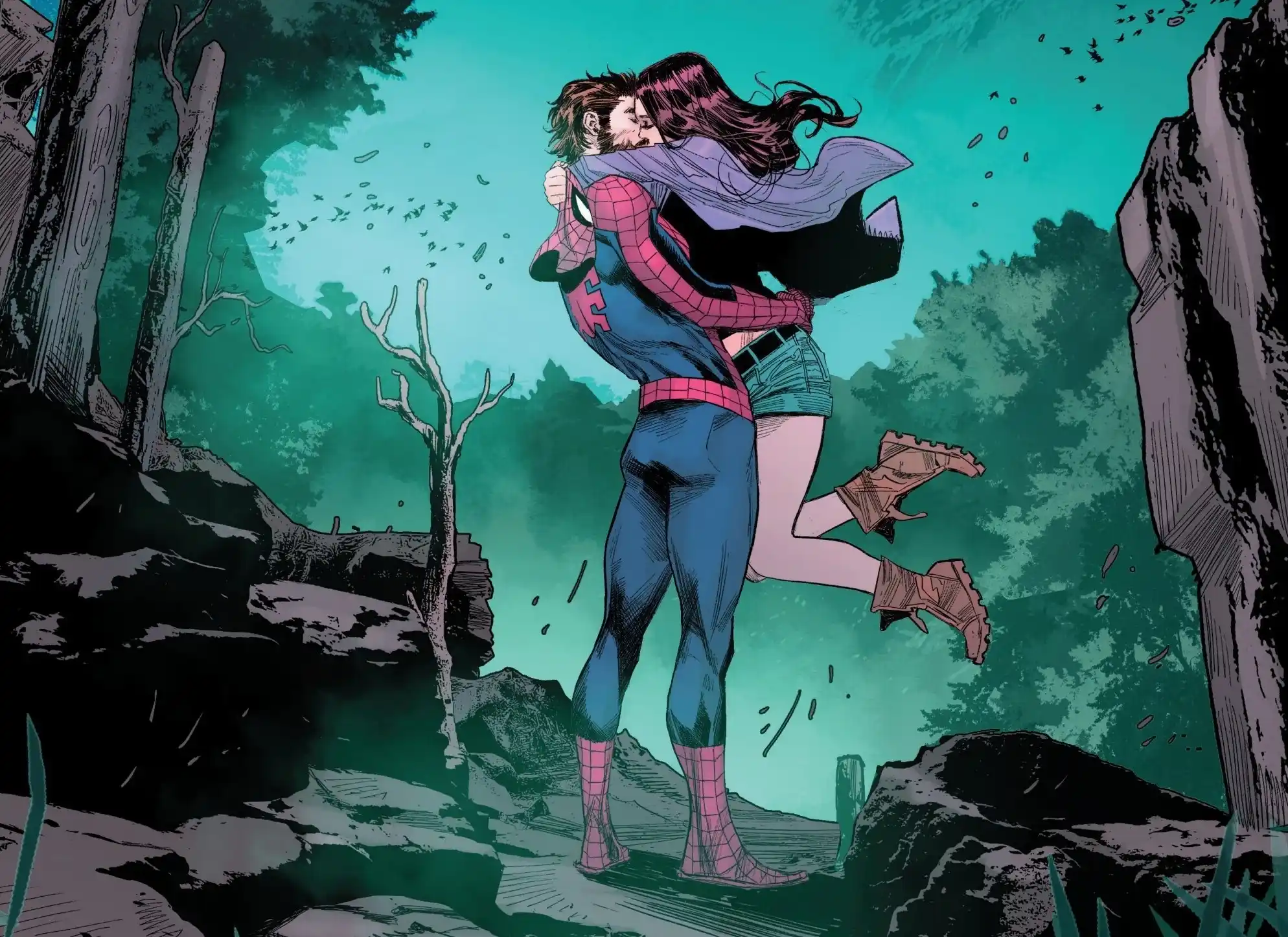
Duos, or partnerships, are the heart of this comic at the end of the day. Peter and MJ, Harry and Gwen, Richard and Felicia, Jonah and Ben, it is a consistent pattern of partnerships. The final stretch of issues brings the Kingpin and Mr. Negative dynamic to the forefront, and their ending solidifies them as a pair. It is a tall task to center each of the sea of relationships in a twenty-four-issue series, but Hickman and team keep the book character-focused with an almost rigid discipline that succeeds in surmounting the tall task they set for themselves. Despite its big ideas in plot and science fiction/fantasy concepts, Ultimate Spider-Man never loses itself and keeps the personalities front and center.
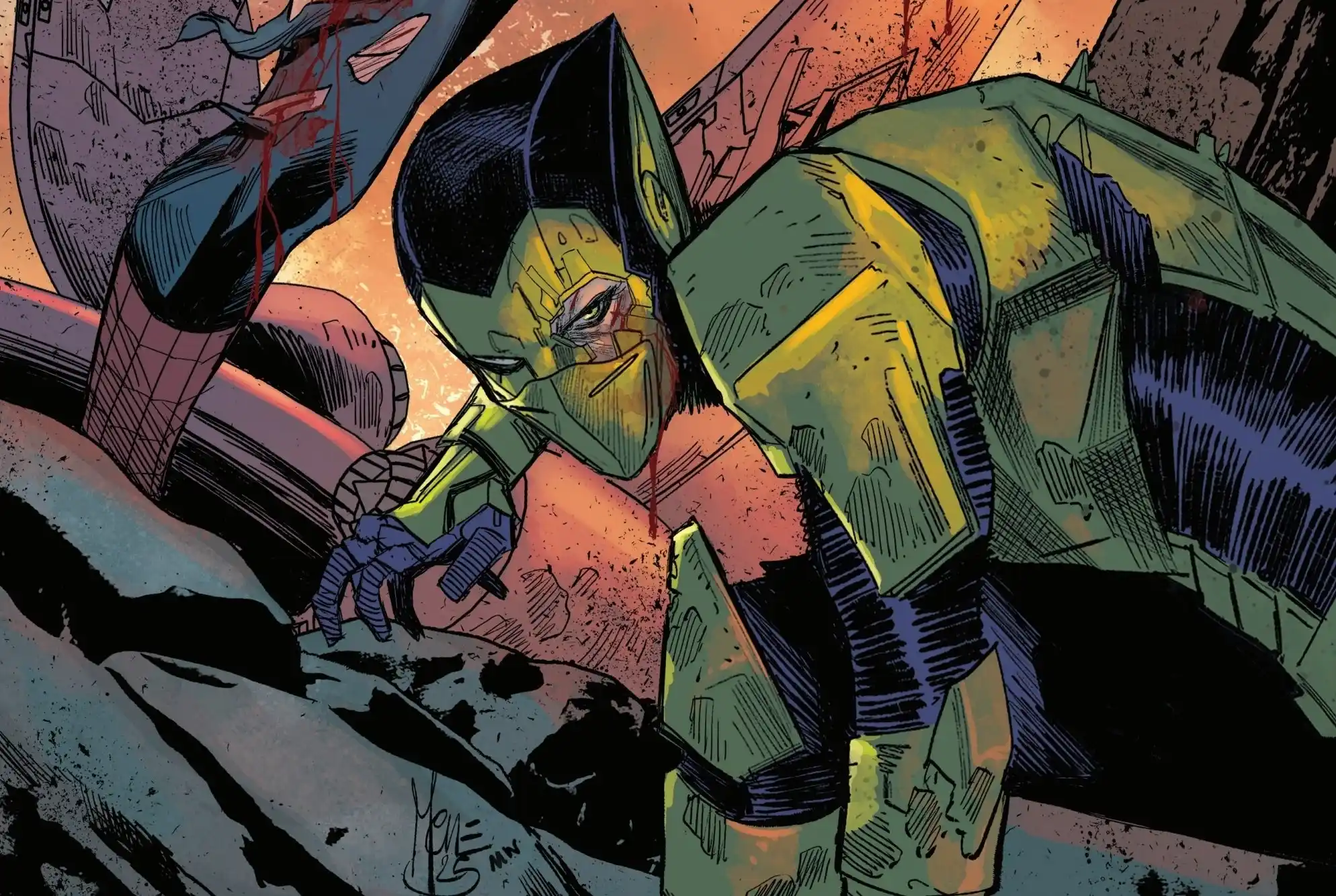
Using frequent, lengthy conversation scenes to showcase depth in each character while keeping much of the plot details and lore vaguely defined allows the book to keep spinning its many plates of surprisingly out-there ideas without making the actual people into unrelatable caricatures. From the many magical minds of Mysterio to the melodramatic Mr. Negative, there is always a sense that their motivation is realistic and believable within the fictional contexts. In truth, as the book points out through MJ, Peter Parker actually has the most suspect ambitions.
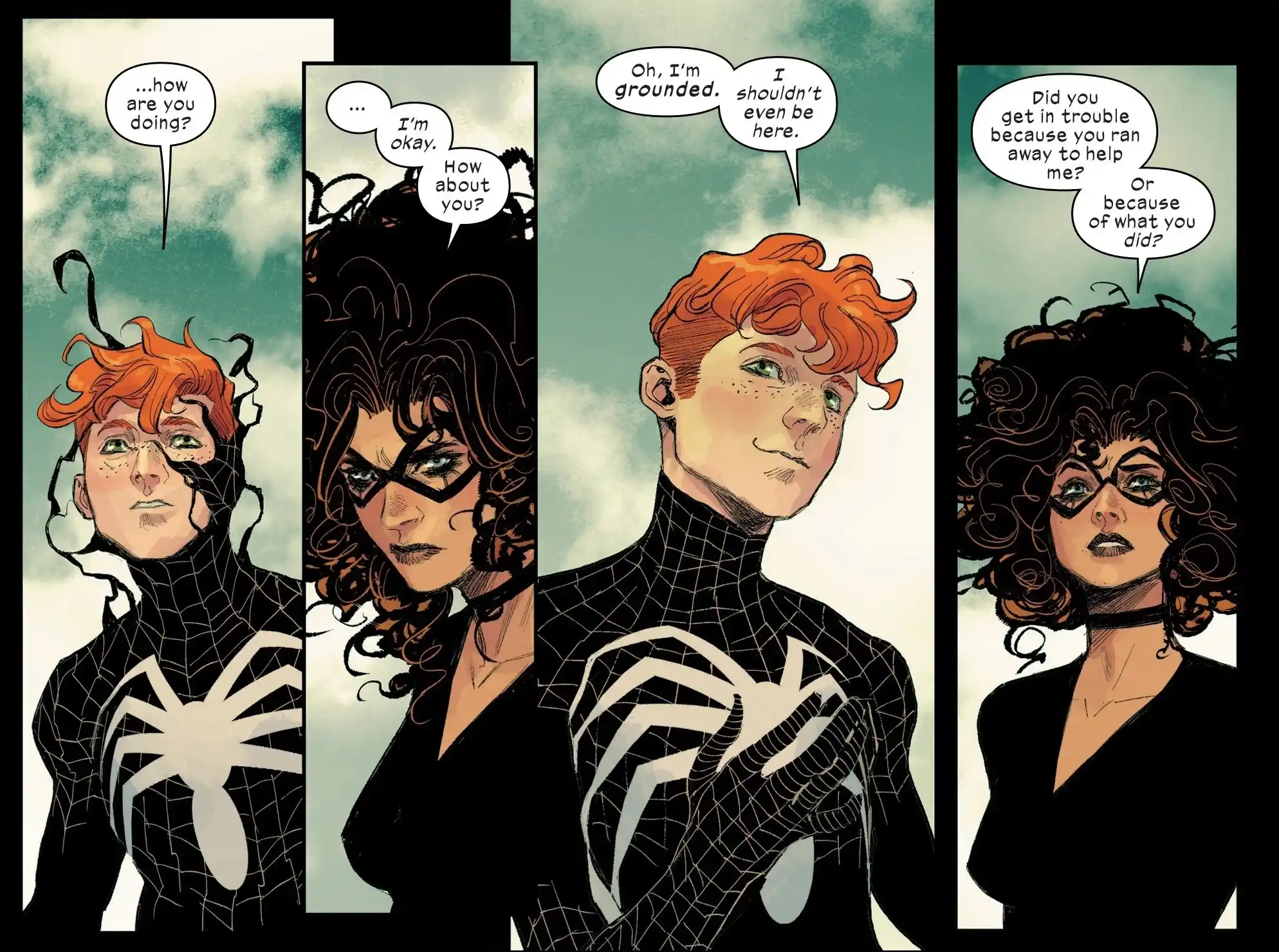
The twentieth issue is one of the most memorable in the series, thanks to one woman, Mary Jane Watson-Parker. While fun to read, MJ has served as a solid structure in the background for most of the series, rather than as a vulnerable person dealing with the whiplash of events in the comic. Towards the end of the run, readers start to see the veneer crack, and the raw, real MJ starts to break through. In her bid to gain a full understanding of the situation in which they found themselves, MJ arranged a meeting with Peter, Harry, and Gwen, where they were to lay it all on the table. It’s an enlightening scene, and in a series of nine-panel grids, expressive talking heads, and nuanced discussion see the writing and art shine together. The culmination of the conversation is a vital question posed by MJ, what is this all for, when does it end?
In response, Mary Jane is told that the group needs to win, and only then will it be over. She does not like the answer and proceeds to knock Gwen unconscious in the bathroom. While the moment is a shock and a bit clunky, MJ's reaction will be interesting to many readers, as they might feel they are on the same wavelength in not fully understanding the stakes of the series. It’s not that the book is complicated, though, it is more that Ultimate Spider-Man retains some of the assumptions and associated baggage that accompany the hero’s main universe counterpart.
It may, by and large, be considered fruitless to try to nail down the exact goals of a hero such as Spider-Man. Penned by a plethora of authors as the main character in a never-ending story across decades, Peter Parker never stood a good chance at a consistent characterization. However, Ultimate Spider-Man is different, as this version of the web-slinger exists only within the limited window of this series, under the helm of a consistent creative team. If somehow this was a reader’s first experience with the hero, I do not actually think the characterization and setup for the concept of a Spider-Man, a guy who swings around and delivers vigilante justice, is ever established well enough. Likewise, Peter Parker as a man seems to hardly exist outside of his position in his family. Readers will fully understand the role Peter plays as a husband, father, and friend, but his independent actions and underlying ambitions seem to be fueled by the meta-narrative of becoming the costumed crimefighter he was meant to be.
The book highlights the nature of positions of power and the vacuum they leave when vacated. MJ understands the dynamic, and that’s what lies at the heart of her earlier-mentioned questioning. She is asking what it means for Harry or Gwen to rise to the Kingpin’s status, and while she is looking to the couple for a response, it is most important for her husband to grapple with the answer. Peter wants to protect his loved ones, that is crystal clear, and at this point in the series, it does not really matter what his past grander goals were, as he is playing a reactive role in keeping them safe. However, the book casts both Harry and Gwen as deeply flawed replacements for the Kingpin, and in fact presents a structure where any direct replacement for the tyrant would be a problem, yet the protagonist never truly grapples with this and ends the book fully supporting their ascendance. Spider-Man does not know that Mysterio’s ultimate goal is to ostensibly correct (reset?) the timeline, potentially erasing Peter’s marriage and kids, but this is an obvious scenario for the reader, and it is never addressed. Similarly, what are readers supposed to think about a journalist-crimefighter who fights for his own billionaire buddy to gain power and influence? Peter cannot possibly want to fix the world, so to speak, in any way that would reverse the Maker's changes, so his goals lie within the bounds of the existing universe. In that case, it is unclear to me as a reader whether Peter has a problem with despots or just wants the right despot on the throne. For a book that places structural power front and center, with the Maker’s hierarchy and downstream control, there is a surprising lack of substance in the titular hero’s actual ideology or hope for the world around him.
Now, of course, the retort to a complaint about a comic superhero’s motivations is to dismiss them as hardly being the point of the escapist book, and that is fair in a lot of ways. I do not think the Ultimate Spider-Man needs to present a full political approach for Peter to tackle the societal problem of crime, but the narrative presented leads me to that line of thinking. In addition, the book attempts to present itself as more mature than the average Marvel comic, not more serious or gritty, but less hand-holdy and formulaic plot structures. USM respects its readers enough not to overexplain its fantasy concepts or revert to relying on flashy fight scenes to keep people hooked. All of this adds to the book's quality, but also to the confusion about why the series refuses to be in conversation with the real world.
Peers of USM have strong cores that relate to real-life phenomena, such as childhood trauma and ostracism in Ultimate X-Men, imperialism and local resistance in Ultimate Black Panther, and, most transparently, the collective action needed to defend the common good that cements the Ultimates. In contrast, this series seems most concerned with what a Marvel landscape would look like if Peter Parker hadn’t become Spider-Man when we are used to, and how the hero could establish himself later in life. The question is not inherently uninteresting to everyone, but it is out of step with the rest of the line and gives the sensation of a book that is pulling its punches.
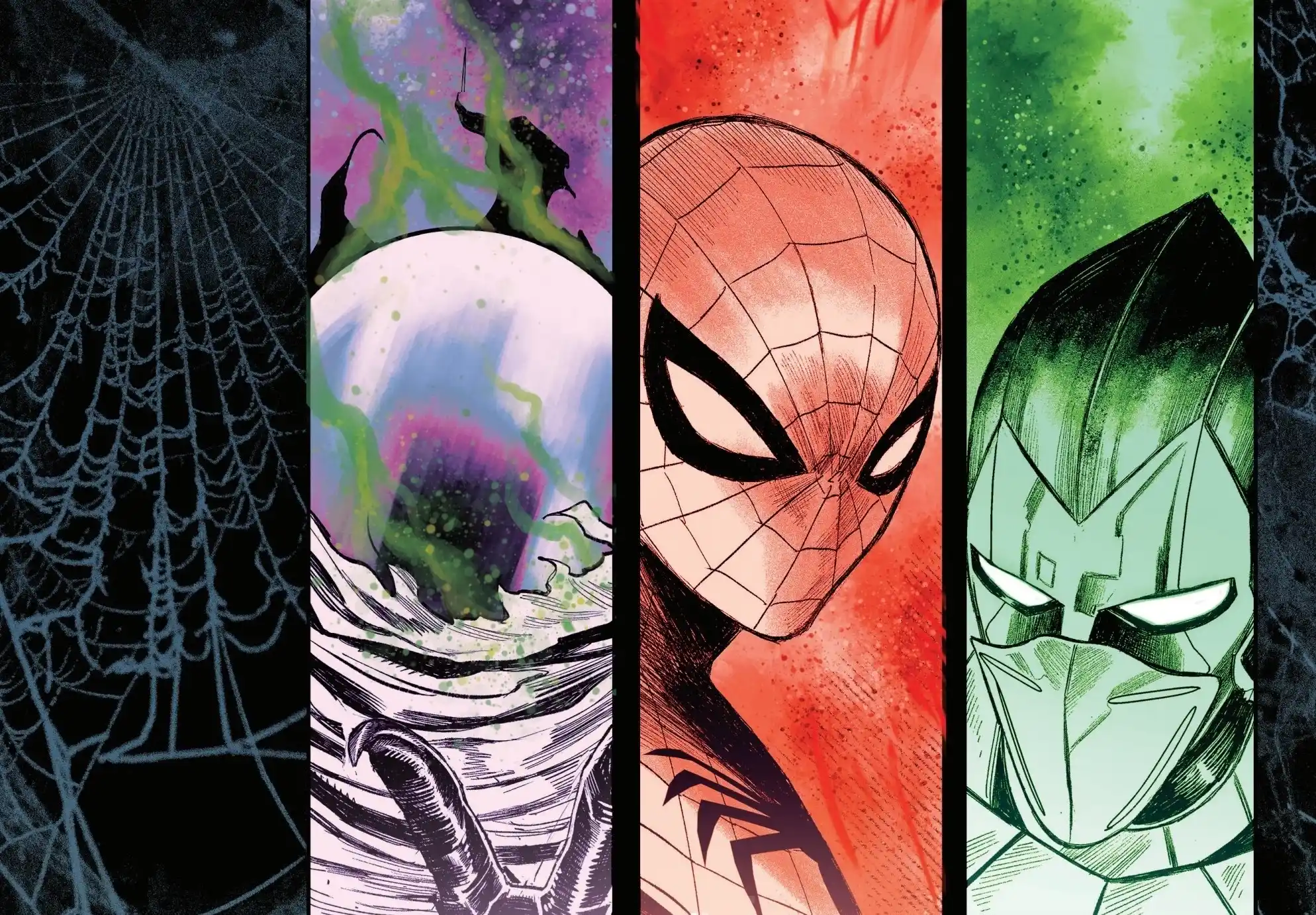
No matter the muddied motivations of Spider-Man, the moment-to-moment reading of the series is pure fun. All of the characters retain a bit too much polish and wit, making them feel homogenous, but the charm is nonstop as a result. If you sit down to nitpick the series, you can, but if you just experience the book, it is hard to say you won’t get pulled into the well-crafted pages, and by the time you get tired or lose interest, it’ll pull you back in or leave you hanging. I can’t say I ever expected to see such an emotional arc from Mr. Negative or a take on the Green Goblin that is both new and compelling, but there they are on the page. Even the personal lives of the Watson family and JJJ's love life will pull readers in. Almost every small detail comes across as fleshed out and as a part of a greater whole. In the same sense, the series never loses its perspective as a slice of what is happening in this widespread, connected universe. It is a book that does everything possible to keep the reader immersed, and it succeeds time after time.
Taking another step back, there is a larger issue with the series, and it is structural and common across the industry, not really specific to this title. However, Ultimate Spider-Man is quintessential ongoing comics, and I cannot help but see that as a weight on the book. There is a world where this book comes out as six-issue graphic novels over two years, and frankly, it would have been far better served by that approach. Putting aside the segmented storytelling and the specific pacing of USM, which are tailored to the distribution method, the series had the potential to be billed as a book for Spider-Man fans rather than just loyal readers of the Ultimate Universe.
Imagine if Marvel treated their comics similarly to a novel, or film, or video game, where they build excitement for a moment and then deliver a full experience at that same time. Currently, the drip-feeding of chapters to the direct market results in such fragmented engagement that it becomes hard not to be spoiled before the actual story even comes out, it can be difficult to keep track of when the version of the story you want to read is being released, and, worst of all, the book gets judged and influenced by swaths of consumers who do not grasp basic storytelling. Only the most fervent and locked-in fans are buying the single-chapter model, and as a result, the discussion around the books becomes far too insular. In turn, the criticisms raised by consumers who are too close to the comic fandom and who have only read segments of the story get taken into consideration by the editorial and creative teams, and can shape the book as it is being produced, and at times lead to the work being in conversation with itself and its early adopters, more than anything else.
A complete Spider-Man book dropping in every retailer, every library, every digital storefront at the same time, with the advertising power of Marvel and Disney, should be a big deal on par with the most popular fantasy or science fiction novel releases. If readers could receive a full story at roughly the same time across the board, it would foster discussions and predictions in ways that are basically impossible in the current framework. It’s so strange to see a medium that was once defined by events and experience comics be completely unable to adapt to a world where seizing the specific moment and becoming a cultural touchpoint is so imperative and so possible for good art with the backing of massive media corporations.
Ultimate Spider-Man cannot be judged based on what-ifs and could-beens, and I am not attempting to do that. The comic is a clean, modern example of how to make the tried-and-true superhero format feel fresh without completely upending everything to which readers have grown accustomed. I am confident after these twenty-four issues that this is the version of the hero that needs to be adopted in the main universe, on film, and across the board. Keeping everything that has come before as vague history and moving Peter Parker into the role of father is a good decision and an easy way to justify a status quo similar to this one. With two kids, the ability to recreate the classic teen hero is trivial, and in these pages, Richard’s arc proves it, as the boy comes across as very similar to a young Peter. Any given element in this fictional world, from the AI Venom or Goblin suits to the council of Mysterios, has enough depth to be adapted and explored outside of the specific context of the Ultimate Universe. USM is the future of Spider-Man in both a literal and a thematic sense, it just remains to be seen whether Marvel (or Sony) has accepted it yet and how they plan to follow that route.
Citation Station
Ultimate Spider-Man: One Last Day, Issues 19-24, 2026, Jonathan Hickman (Author), Marco Checchetto (Illustrator, Cover Art), David Messina (Illustrator), Marvel.