Wonder Woman's Rebirth and How Not to Kill a God
The Great DC Sightsee


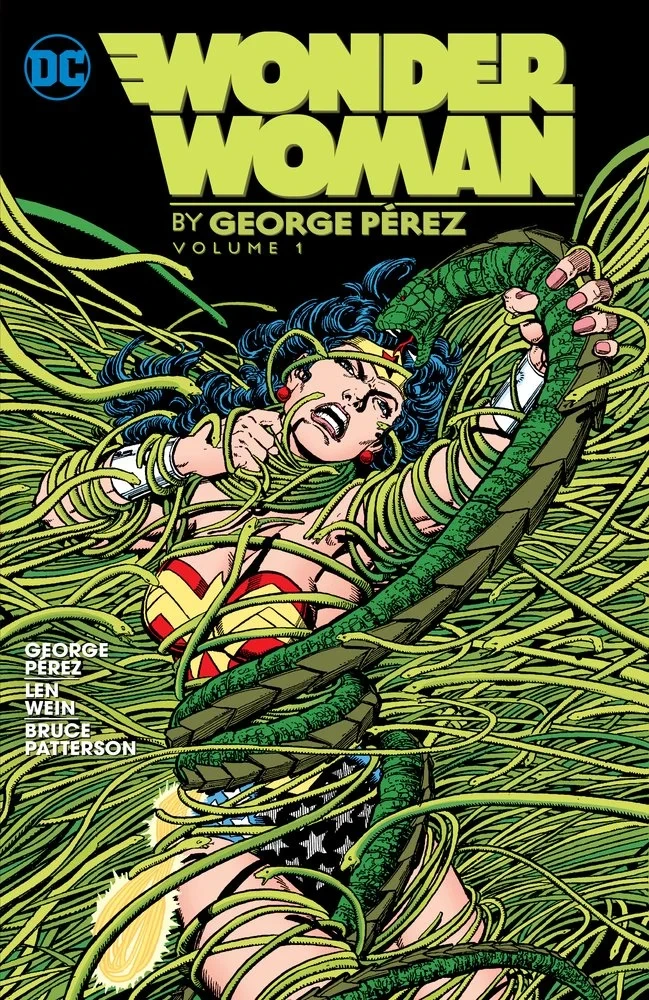
We are continuing our journey of the DC comic universe here at Comics for Y’all by circling back to the leading lady of the line, Wonder Woman. Picking up on issue seven of George Pérez’s lauded and lengthy run, we see Diana reborn once again, after her initial reboot and six-issue fight against Ares, which resulted in her apparent death and the war god’s defeat. With the aid and associated debt from Zeus, the superhero is returned to her home on the island paradise of Themyscira. After recollecting herself, Wonder Woman heads back out to man’s world, the city of Boston, and the grander DC universe. Volume one of Pérez’s run concludes with issue fourteen and gives readers an arc of Olympian drama alongside the establishment of the hero in the comic world.
As soon as she is able, Diana heads back to the city of Boston, where she strives to learn about the lands outside of Themyscira, as well as share insights gleaned from her life within the island. Pérez takes time to establish Diana’s place in man’s world, and gives space to the human supporting characters, even when their panels can often feel a bit boring and banal compared to sections with Wonder Woman and mythical entities. While it is a bit of a rehash of earlier issues, the setup of Diana in America is well done and situates the reader for a long run and a consistent status quo. The nonpowered cast members tend to be earnest and simple, providing a strong contrast to the gods' and goddesses' complicated, grand endeavors. That’s not to say everything is mundane in Boston, though, as readers are given an introduction to the titular hero’s arguably most iconic villain.
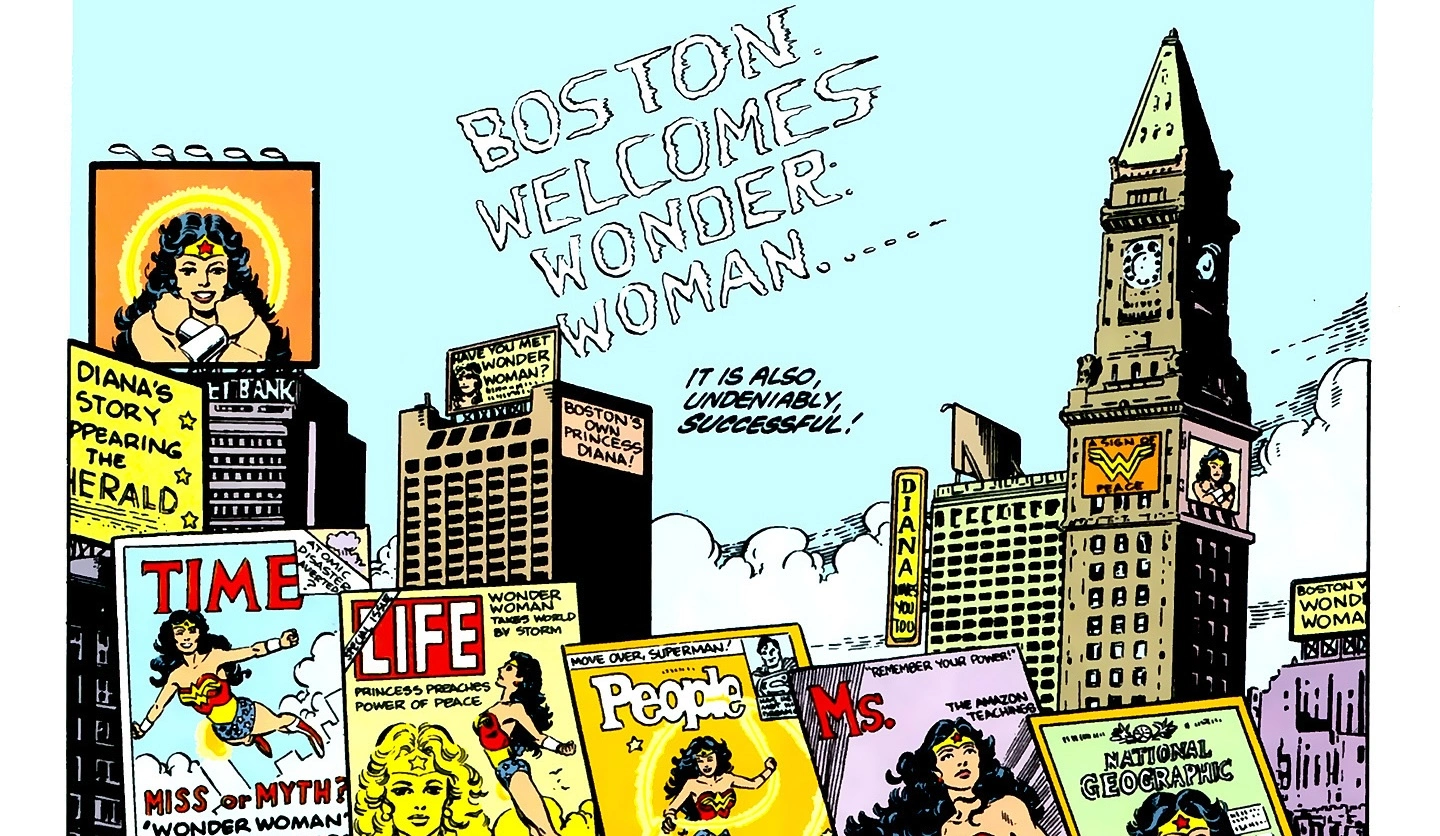
The Cheetah is introduced and addressed for a couple of issues before Diana returns to the world of her birth. While the stakes of the conflict are smaller, the character work is greater in many ways. Readers begin to see Wonder Woman enmeshed with her human family and operating in complete independence from the Olympian context, more like a traditional superhero. The focus shifts to the new villain, and the book makes sure to give enough time and space for readers to become invested in the Cheetah. There’s no pretending that she will not be a recurring member of the book’s cast, and I doubt many would have it any other way. With the spotlight on the magic cat-woman, relationships between Diana and her found family become entrenched and emboldened in their brief time on panel. After the events come to a close, the book has sold Diana’s existence in her new setting as compelling and full of potential.
For this piece, we are not going to explore the plot in intricate detail, mostly because the story is straightforward and largely on par with the quality of the initial six issues. The narrative presented here is also second in priority to the larger goal of establishing Wonder Woman as a figure in the post-Crisis DC universe and building up a status quo around the hero. Alongside the writing, the art has remained just unbelievably consistent since the launch of the series.
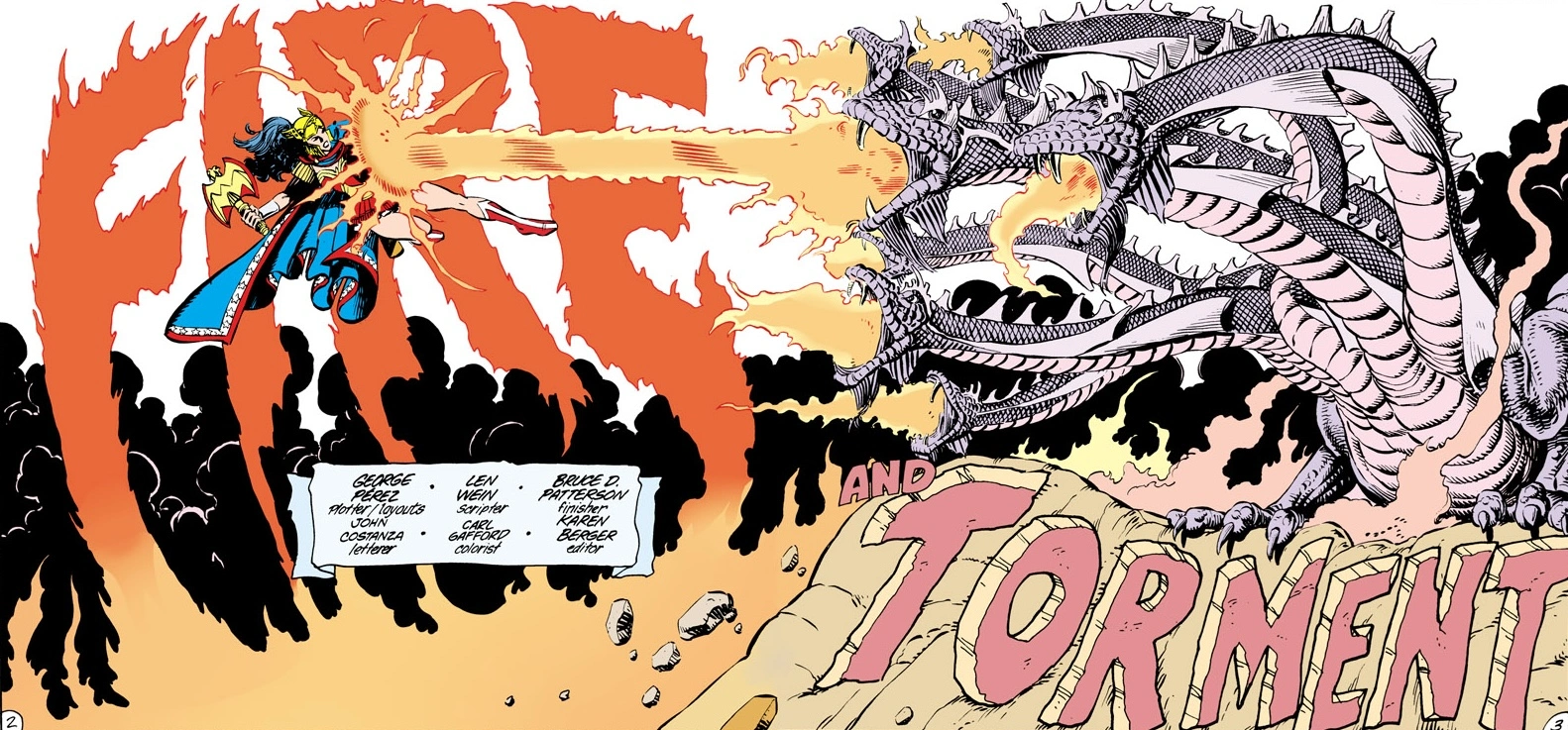
Page after page, panel after panel, Pérez delivers. The art direction stays true to the course defined in the first half dozen issues, with the Olympians being statuesque and physics-defying, while the humans are more realistic in design and more familiar to the DC house style. Panel structure is loose and varied, with Pérez often choosing to render full-page art, with smaller panels layered on top to preserve a sense of progression and sequence. Expressive, stylish, detailed, there is just an immense amount of skill and effort evident all through. Compared to the other two heroes we have touched on in our exploration of DC comics, Mazzucchelli's work on Batman is the only example of art that stands so strongly on its own merits, while also being a perfect fit with the narrative to the point of being inextricable from the book's identity. Pérez has the benefit of being the main plotter across all these issues, and it is a clear benefit for the finished product.
As Wonder Woman sends the Cheetah running, Pérez brings the story back around to the Olympians, where he can continue to flex his god-drawing abilities. There is a real weight to Diana leaving Boston, as the short time she spent with the human characters had dense relationship building, and the charming, unique personalities of each background player really endeared them to the reader. This is an example of a tactic that both Pérez and Byrne, on Superman, employ to build a specific dynamic between the reader and the hero on the page. By keeping larger-than-life characters such as Diana and Clark as straightforward, almost blank-slate do-gooders who are not truly in danger from their surroundings, the book fosters a particular relationship between the reader and the main character. It is as though the two are viewing the events from the same vantage point, side by side, rather than the title hero truly being a member of the play acting out on the page. The feeling is that Diana will succeed in making it through whatever stands before her or come back from the dead after failing, because either way, she’s going to be waiting for you on the shelves next month. While fun and certainly a product of the comic's original distribution method, the decision does result in a detachment from the story's stakes that can undercut the book’s better scenes.
The moments when Diana comes across as most enmeshed in the setting around her are during her brief stint in man’s world, going up against the Cheetah. There is a real sense of worldbuilding and connection with her found family. However, her stay is all too short, and soon Wonder Woman has to go back to deal with problems of a more mythical proportion. For the rest of the first volume, Diana becomes entangled in the ever-growing web of the gods, and the story rounds out the Amazon’s thematic arc that was started at the beginning of the series.
While the Olympians and the Amazons can be a bit hard to invest in, as the gods, goddesses, and warriors just seem too large to be truly relatable, the conflict is interesting and multifaceted enough to be compelling on its own. On Olympus there are three distinct players, Zeus and the gods, the goddesses, and Pan, satyr and nature god, in his own corner. Down in Themyscira, Wonder Woman and the Amazons have similar, but not fully aligned goals, with Diana’s mom and the leader of the warrior women, Hippolyta, breaking away from the group to an extent as well. The sides are nuanced, but not washed over and equated. The Amazons are portrayed as being close-minded on the issue of sharing themselves with the wider world, something for which Diana is pushing. However, they are still being manipulated by the gods, and are shown to be worthy of Wonder Woman defending their autonomy from their all-powerful overseers. Zooming out, in Olympus, the split between gods and goddesses is similarly structured. The intent of the goddesses is not shown to be pure; they want to use the Amazons in their own plans, but the machinations of Zeus are so disgusting, he wants to turn the paradise island into a personal brothel, that the schemes of the other gods become obvious lesser evils. Then the book widens the conflict into another layer and paints Pan as an even greater villain, which turns out to be too tall a task.
Lurking in the background and hinted at through consistent teaser scenes, Pan is up to no good. As Zeus subjects Diana to his challenges and the Amazon finds herself face-to-face with many of the most iconic creatures and characters of Greek mythology, readers will keep the nature god’s manipulations in mind. Unfortunately, the climactic reveal is that Pan had been murdered and replaced by one of the infamous Manhunters. Or, to more accurately describe them, one of the obscure villains from DC’s 1988 limited series, Millennium.
The book's overarching plot has a central pivot point on Pan, and the narrative takes a sharp turn following the revelation of his death. Despite the nature god’s importance to the book, there is no time given to the so-called Manhunter who took his place in Olympus after murdering him. Of course, everything readers may want to know is likely in Millennium, but when reading the Wonder Woman series in collected format, the story just isn't there. Wonder Woman’s epic battles against cyclopes, dragons, snake-women, and worse are undercut by the introduction of a being who can kill and deceive the gods of Olympus and who drastically impacts the fate of Diana and the Amazons, yet is never explained or explored. This is, of course, a classic shortcoming of the shared universe. For the crossovers to feel important, they require build-up and plot weight in the individual series, but those separate lines still need to operate as independent stories outside of the event book. The contradictory dynamic leads the book to attempt to minimize the time spent on the crossover material, while maintaining the events within those books as crucial and canon. It’s so jarring and off-putting in a book that seems to be crafted with meticulous care across the board, also to be undercut so severely in the climactic finale by basic comic book messiness.
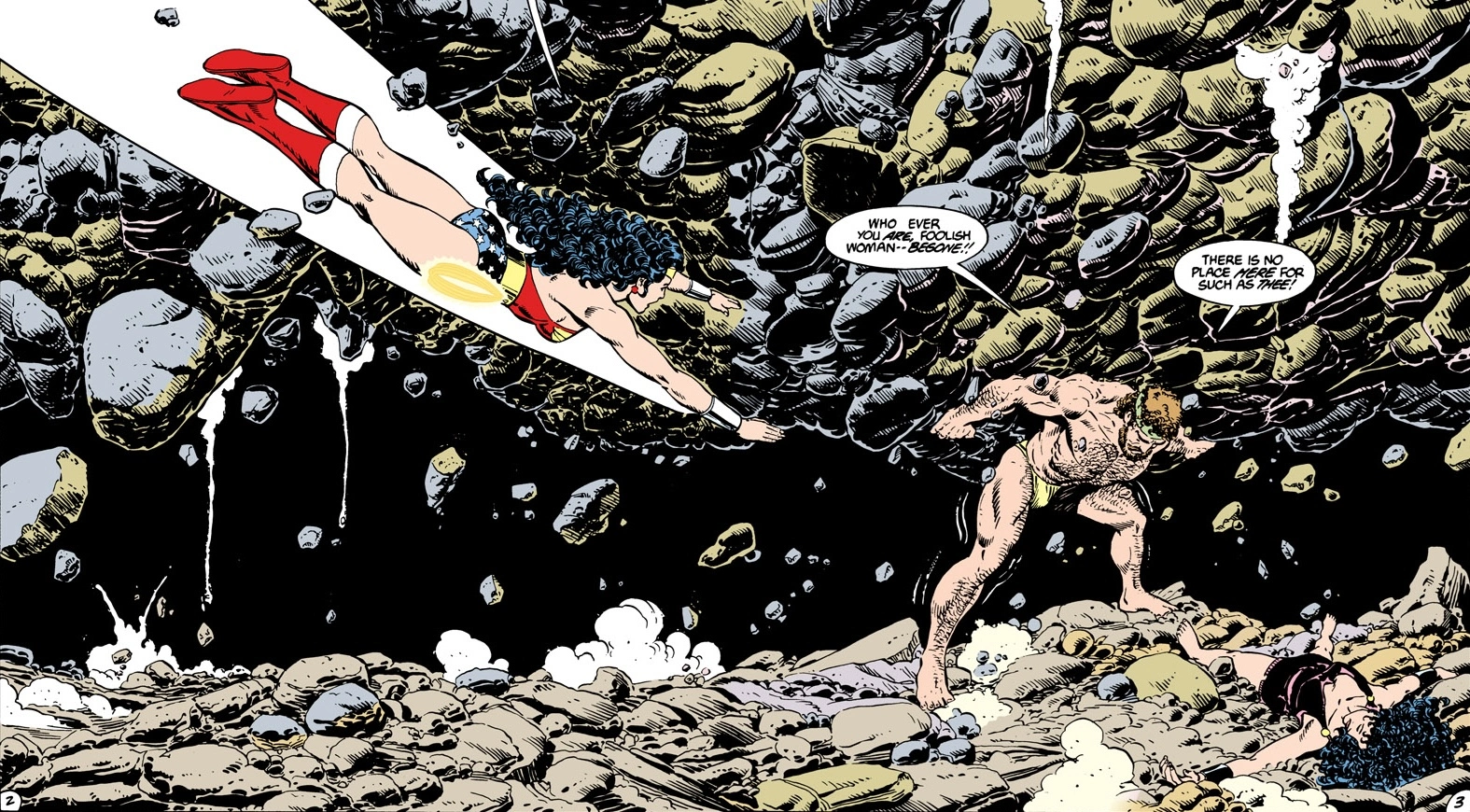
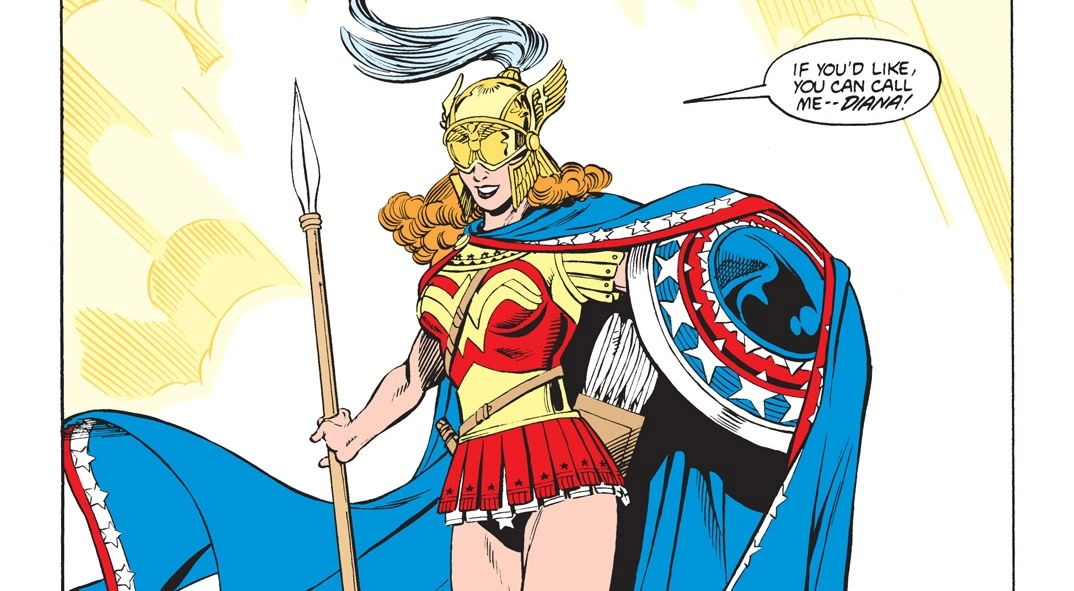
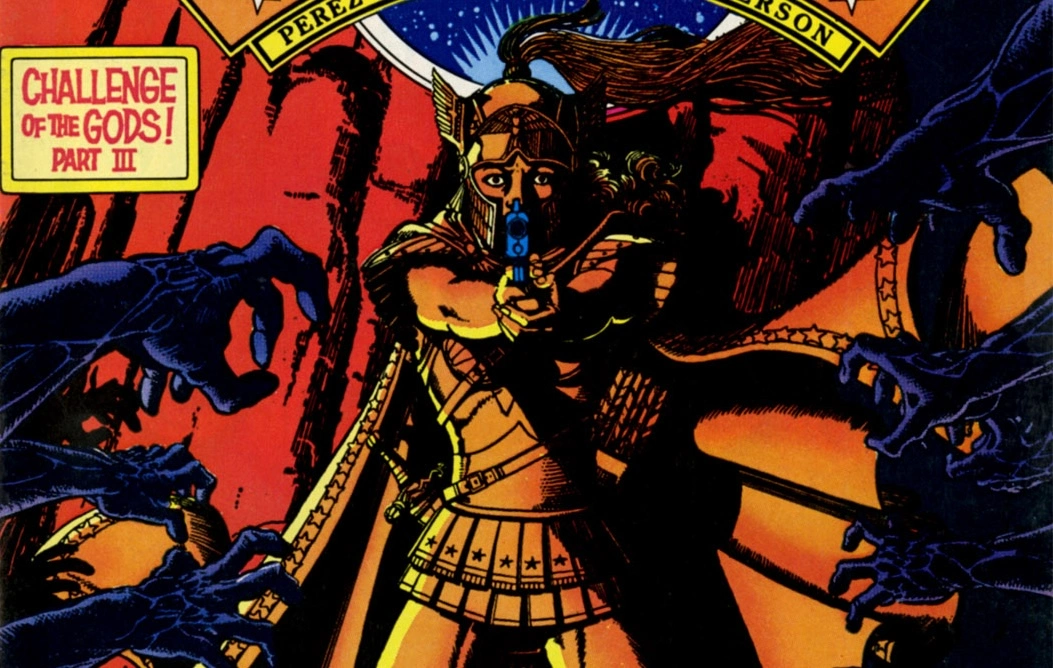
To be clear, the final issues of this volume are actually standouts in terms of action and scale. Wonder Woman faces a plethora of legendary creatures, and the associated storyline with Hippolyta is pure comic book melodrama. Diana meets her namesake and learns of the human woman’s connection to the Amazons. The story of the original Diana ties together a lot of threads introduced at the beginning of the run, and contextualizes the singular gun that exists with the Amazons, which continues to be one of the coolest parts of Themyscira’s lore. It may not always work thematically for the hero, but the aesthetic of a Greek warrior hero wielding a piece is loads of fun. The book touches on some feminist or progressive stances, but does not commit to anything more concrete than a generic call to do good. Pérez makes the villains so cruel and intertwines misogyny into their characters so tightly that the book does not have to spend time outlining the specifics of Diana’s moral compass.
As a discrete package, these issues of Wonder Woman are probably the weakest of the bunch that we have touched on in these articles on reading DC comics. While the highs of the series are close to the likes of Miller’s Batman and Byrne’s Superman of the time, the rug-pull of the main villain holds the book back. The art direction slots right into the shared universe, but is tailored specifically for Diana’s world and aesthetic, in a similar, but arguably lesser, manner to David Mazzucchelli on Batman: Year One. Hopefully, after getting around to Millennium, I will find the arc more fulfilling, but as it stands, Pérez's run on Wonder Woman starts strong but flawed.
Citation Station
Wonder Woman 7-14. George Pérez (writer, artist, covers), Len Wein (writer), Bruce D. Patterson (inker).