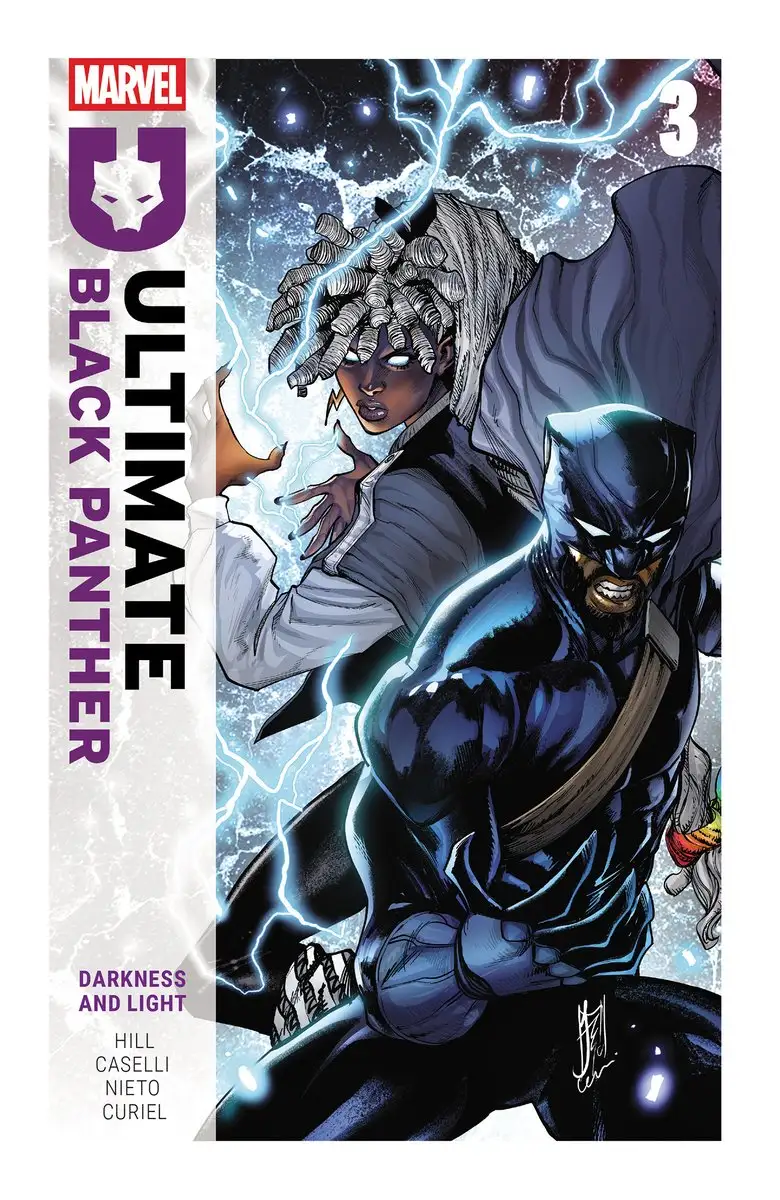
Fight Demons from the Past in Ultimate Black Panther: Darkness and Light
Marvel’s Ultimate Universe

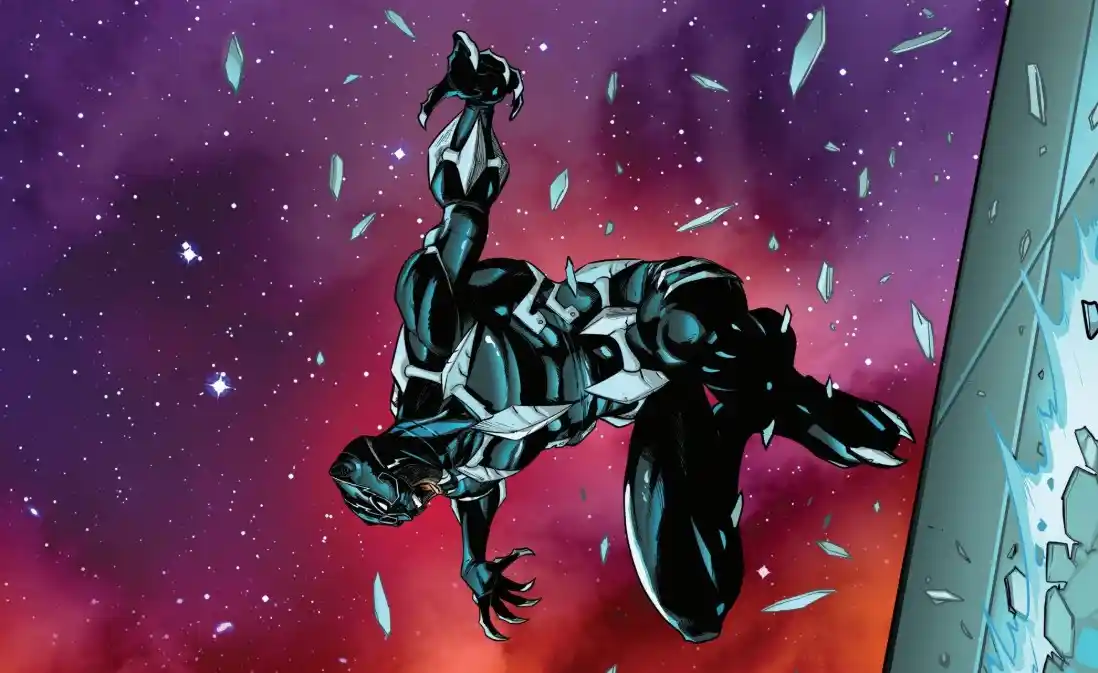
Marvel’s idea of an Ultimate Universe, an alternate publishing line where heroes and teams are given revamped, often modern, backstories and skewed characterizations, is self-indulgent in and of itself. This is particularly true of the initial Ultimate line launched in the early 2000s, which kept characters firmly grounded in their traditional selves, but with tweaks and changes to make them feel more edgy, and of the times. 2023’s Ultimate Universe has not stuck to such creative limitations in general, with the scope of reimaginations among existing characters being much broader. Ultimate X-Men is an all new take on Marvel’s mutants, Ultimate Spider-Man explores a status quo that is explicitly unavailable for the main iteration of the character, and Ultimates reinvents the Avengers brand with a political focus that is entrenched in the new universe. Ultimate Black Panther contrasts the others’ creative decisions and follows a more traditional path, making small, modernizing changes to the source material, resulting in competent but underwhelming results.
The fundamental critique of Ultimate Black Panther is that it does not benefit from, or naturally add to, the Ultimate Universe. There is no integral, intimate connection with the events from other books, such as Hickman’s Ultimate Invasion, and there are no creative swings that are too bold for the main publishing line. The series is an insular take on Black Panther and the nation of Wakanda, and works out to be a basically standalone package. This is not an inherent knock on the title, but it becomes one when the limitations from the greater universe impede the title’s narrative and pacing. The two-year time frame that underpins the Ultimate Universe becomes an explicit consideration during the third volume of UBP, with storylines and character arcs skipping forward and closing up at unnatural rates.
Starting in issue 13, the story continues the war being waged in Africa, mainly between the invading Moon Knights and their armies and the defending Wakanda. This volume touches on the situations and autonomy of other involved countries, but the world’s second-largest continent’s geopolitical situation is not the focus of the series. Instead of widening the scope, UBP reins the narrative in and tries to tell a more personal, melodramatic story. While there are some political motivations underpinning the characters’ decision-making, the overall consequences are not explored in depth.
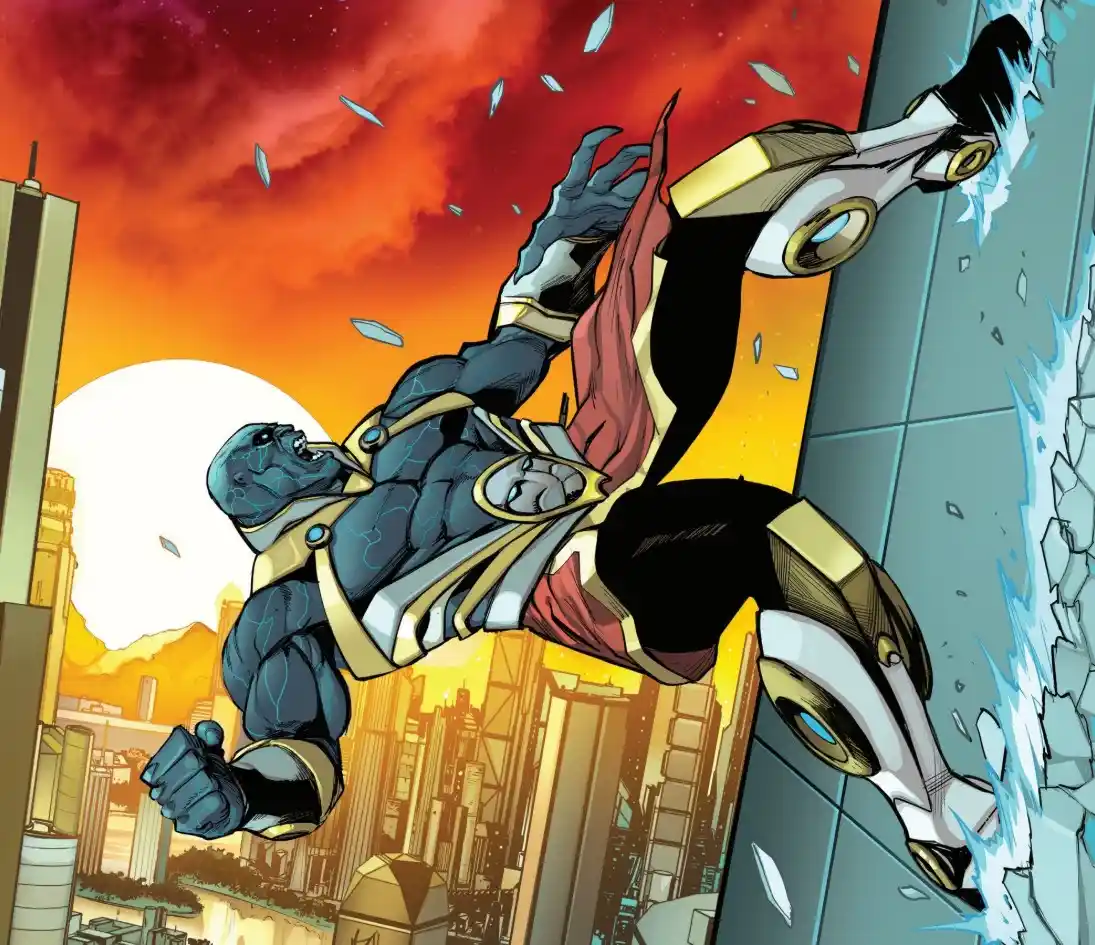
T’Challa and Inan, the Sorcerer Supreme, are investigating the idea that vibranium is somehow alive, which has become apparent in previous entries to the series. After what seems to be a remarkably brash decision, Inan unleashes a being known as Progenitor. This slender Apocalypse strikes Wakanda in yet another act of war against the African city. A member of some ancient, advanced group, Progenitor is attempting to wield vibranium as part of a long-term plan to restart his people, or bring them forward in some way. The primary function of Progenitor, besides being a big guy to punch, is to instill fear of the rare metal that fuels the entire Black Panther operation and to strip the hero back to a more limited capacity.
Storm joins Black Panther and has left Wakanda to fight the war on the ground and deal with some foreign relations. At home, Killmonger and Queen Okoye are sharing ideas, amongst other things. Contrasting ideals undermine both of the title’s significant relationships, with Storm and T’Challa getting together at the same time Killmonger and Okoye are having their meeting of the minds, and bodies. The crossed lovers represent the diverting, at least in perception, of the goals of Wakanda’s most powerful. Killmonger and Okoye reveal an interest in expanding their country, while T’Challa grapples with the reality that the same nation is built on a chaotic resource that appears ready to destroy them. It sounds a bit disjointed, because it is. There are a lot of good ideas, but nothing of substance feels connected, with the prophecy situation doing the bulk of the work, tying events and major players together. There’s not enough time spent in previous issues for the reader to build an affinity for the characters and their existing relationships, so the shifting dynamics do not feel as impactful or compelling as the political situation, but the former receives a lot more space compared to the latter in this volume.
One of the draws of the Ultimate Universe in general is the strong, consistent art style within each line. While Ultimate X-Men may be the most divergent from the Marvel house style, all the books are high-quality, with their own charm. For UBP, the standout has been the coloring, with an evening sky of a palette, the art has been able to capture a surreal, dream-like tone, which works well for a book that is a mashup of magic, prophecy, and technological fantasies. There are still lots of stock standard fight scenes and generic compositions for the most part, however, this volume of UBP does allow for some more artistic flexes than those previous. In particular, there are a handful of pages with interesting, dynamic layouts where the panels are almost crashing into themselves. Even on a closer level, there are some fun, evocative expressions and body language from the characters, but the art’s deference to the typical Marvel style holds it back from carrying the book to greater heights.
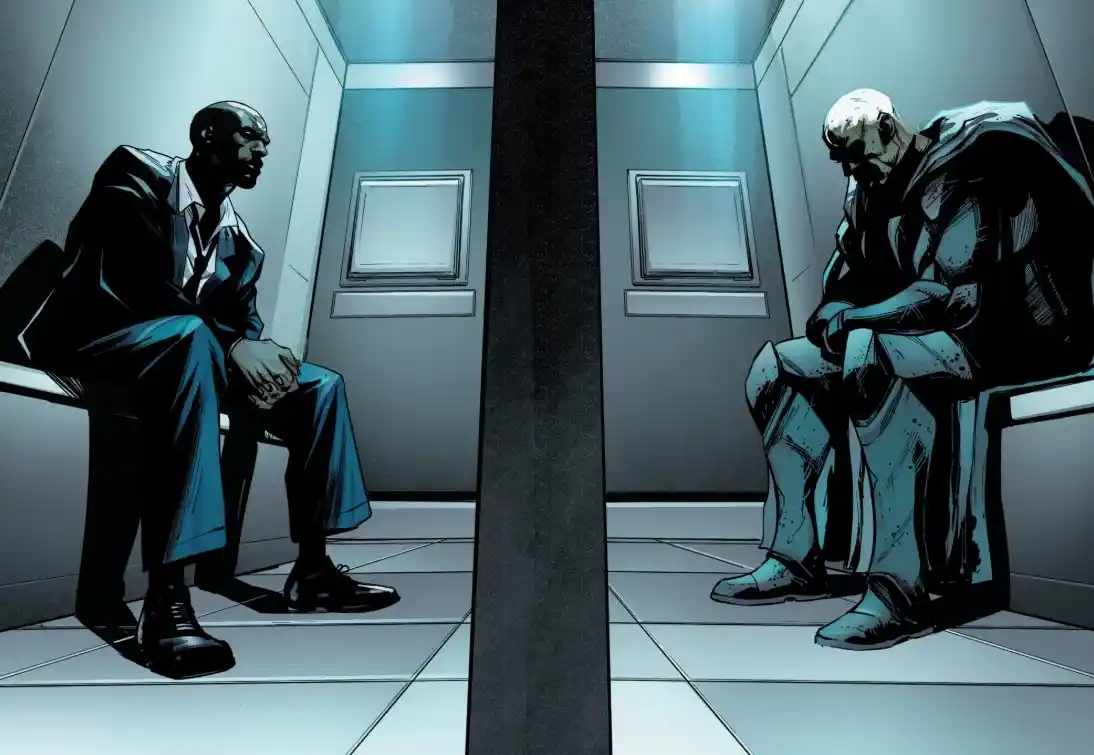
As Darkness and Light concludes and the entire ongoing series prepares to follow suit, Ultimate Black Panther has yet to break through the ceiling between good and great and has struggled to define itself distinctively from its peers. Both the mainline version of T’Challa and the other series in the Ultimate line loom large over UBP. Would these three volumes be ideal for a casual viewer who watched the MCU movies and liked that version of the character? Probably not. There are too many convoluted plot elements that are substantial for this version of Wakanda, but seem tangential at best to the wider Ultimate Universe. The series does not pick a lane between being an easy-to-pick-up Elseworlds-esque Black Panther comic and an integral link in the Ultimate Universe chain. As a reader, it feels I am meant to be invested in these characters because of what has been established in other comics and movies, but at the same time, the thrust of the book continues to be simple subversions where characters make a decision or hold a stance that diverts from their standard characterization. It’s a problem permeated throughout the Ultimate line, and which exists in other alternative universe experiments, such as DC’s Absolute Universe, though that line goes out of its way to keep each version of the heroes distinct from each other.
With the setup in the first volume, Ultimate Black Panther was poised alongside Deniz Camp’s Ultimates to comment on the authoritarian world order and the ever-present imperialism from The Maker’s Council on the Ultimate world. While Camp’s series is not a political manifesto, it does not lose its vision amongst the time-traveling and battle scenes that make up Ultimates. For UBP, the exploration of larger concepts along the lines of colonial invasion and indigenous tradition is sidelined in favor of melodramatic interpersonal conflicts and generation-spanning sci-fi prophecies, in a way that feels disjointed and unintentional. There is a path forward that ties the comic book nonsense back into the more compelling themes, but even then, it is hard to see how the series connects with the broader universe, which is supposedly about to come to a close. After the next volume, UBP may present a twenty-four-issue, insular story that is satisfying and fulfilling, but that’s not the impression readers will get from the first eighteen chapters.
Citation Station
Ultimate Black Panther Volume 3: Darkness and Light. Bryan Edward Hill (writer), Stefano Caselli (penciler, inker), David Curiel (colorist), Cory Petit (letterer), Carlos Nieto (penciler, inker), Joe Caramagna (letterer).