The Award-Winning Graphic Novel About the Tragedy of Nostalgia
Indie Thing Under The Sun

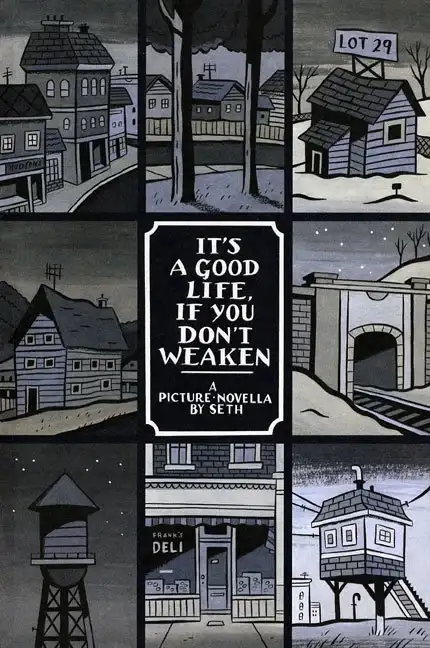
In all of us, there exists a line between passion and obsession, one that can be both fine and blurry. We can define ourselves through our interests and hobbies, but we risk becoming shallow if there is not more to us underneath our consumption patterns. This distinction is at the heart of It's a Good Life, If You Don't Weaken, a graphic novel from the writer-artist known as Seth. A part of the creator’s anthology series, Palookaville, the story was collected in 1996 and won an Ignatz Award the subsequent year. The book follows a fictional cartoonist by the same name as the author, who becomes enraptured with the seemingly secret history of an obscure former artist from The New Yorker. An ironic and somber work, the novel separates itself from the expectations and tropes of larger publishers and mainstream comics, while critiquing the very nostalgia peddling in which they routinely engage.
Seth is a man who loves the past. He is open with his friends and the readers, admitting that he ponders and imagines moments from his own history in a constant search for the comfort they provide. As a cartoonist he feels the world around him has lost its color, declined over time. Seth’s existence is a struggle to tread water, to hold back the hands of time, but not to appreciate the present so much as elevate the past. Self-described as depressed, the protagonist lives in his own head, replaying his own life on repeat, analyzing and nitpicking every slight failure and basking in familiar wins. Within his recursive introspection, a curiosity arises about a mystery niche cartoonist, about whom Seth cannot find easy information outside of a few pieces in a magazine or two. Discontent with the revelations mined from his own past, the protagonist’s search for Kalo, the unknown artist, begins to stand in for the great secret of Seth’s personal existence which seems to always elude him.
Charming yet awkward, Seth is a relatable mess as he judges everyone including, perhaps most harshly, himself. It is that sort of narcissistic introspection where he scolds himself but does not change, as though he does not believe in his own admonishments. He is baffled when his best friend, Chet, does not become hooked by the mysterious Kalo’s unknown identity.
All the same, Seth takes the information and runs, without further including his fellow cartoonist beyond reporting back, after Chet is able to provide some insight into the search for Kalo from an old magazine. Seth finds a woman named Ruthie, who, despite being the near opposite of the protagonist, appreciates and is endeared to him and his weird little obsession. Ruthie could not be less concerned about whoever Kalo might be, but she provides a bit of back-and-forth and uses some common sense to uncover facts about the enigma which were right under Seth’s nose. Her discovery spurs Seth forward, but it does not prompt him to include Ruthie fully, nor does he take a moment to think about how it is that he has actually made progress in his investigation. If he did think a bit he would realize he found success through his conversations and relationships. As he dives further into himself and blocks out his loved ones, readers will groan as both they and Seth both become less sure of what exactly the cartoonist is looking for.
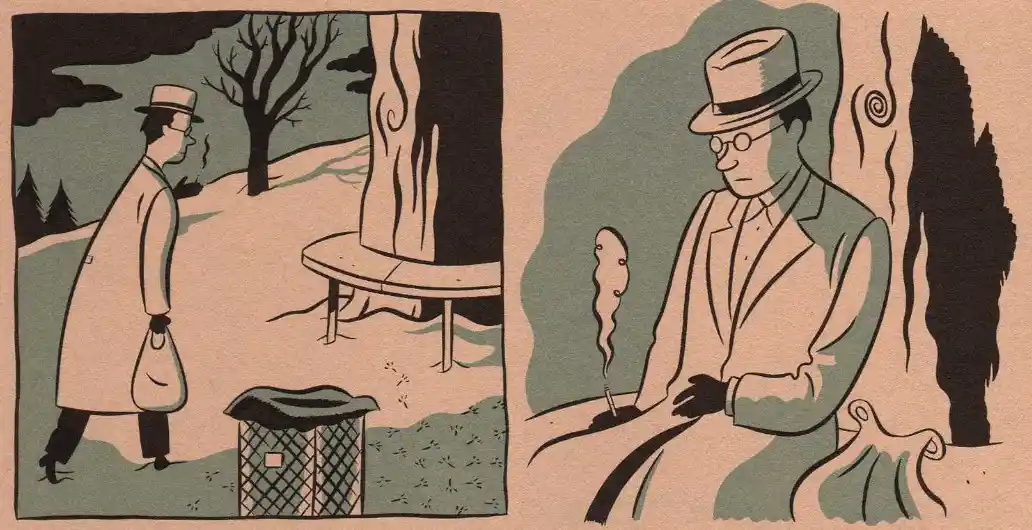
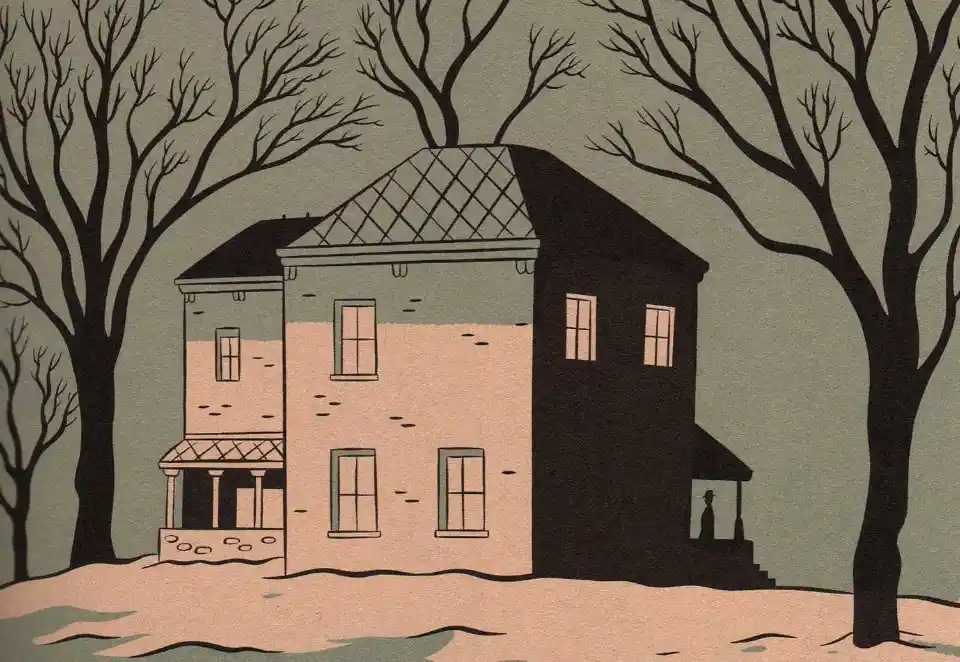
It's a Good Life, If You Don't Weaken employs a classic cartoon art style, characterized by simple, expressive figures and broad brushstrokes. Seth, within the novel, even comments on his preference for the style, which was popularized through publications such as The New Yorker. While the graphic novel is not short on dialogue or exposition, the book displays a confidence in its art through numerous extended, wordless panels. The overall bleak, depressive mood of the comic’s prose and grey-blue coloring contrasts with, and highlights, the more simplistic and bold artistic choices, resulting in a powerful juxtaposition of whimsy and hopelessness. This balance between upbeat and downtrodden is at the heart of the comic.
Readers will find their heart and stomach most wrenched by two sequences, first in which Seth reconnects with his childhood hometown and, second, when he converses with the mother of the long-lost Kalo. We see the cartoonist lose Ruthie as he refuses to open up his quest and self to her, and continues to wallow in his own past. There’s a pretty crushing scene where Seth sees a child playing in their backyard, and a smile of nostalgia sprouts across the reminiscing man’s face. His joy is pure and genuine, but in the context of having thoroughly isolated himself, it is pitiful to see the lonesome happiness to which Seth has limited himself. When Seth’s mission is finally complete, Kalos’ identity and family are found, readers are given interactions between the protagonist and the lost cartoonist’s surviving relatives, which underscore the two-sided nature of the entire objective.
Seth interviews both the mother and daughter of Kalos, neither of whom has a complete appreciation for the late cartoonist's work. Through his questioning, Seth discovers that comic creation was not the central focus for his lost hero, but instead a fleeting pursuit. While Kalos had a love for the pen, he had many passions, and his family rose to the top in the end. Of course, that could be related to the sources of the information. Nevertheless, the picture that comes clear for Seth is not one of a tormented, struggling artist toiling day and night to create masterpieces to no appreciation. In fact, most of what is revealed about Kalos shows a man fighting against the harsh forces of society to protect the home and family he has found and made despite his career as an artist and the associated hardships. The narrative Seth finds stands in stark contrast to his own, with his sacrifices made to cling to the past coming at the expense of connections in the present, while the opposite is true for Kalos, who was forced to abandon certain creative ambitions to support those around him.
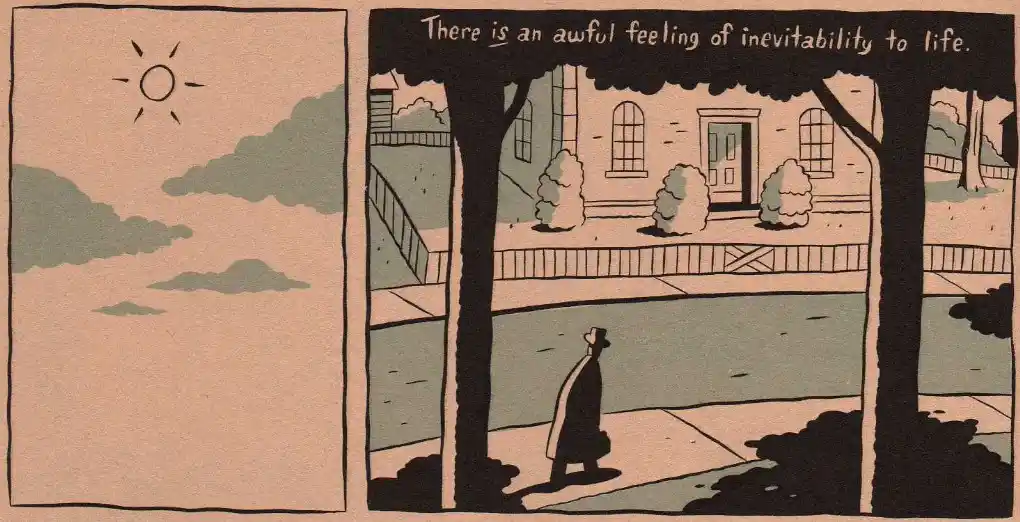
There is a brutal beauty to It's a Good Life, If You Don't Weaken. To see someone so misguided and, at the same time, so relatable strikes a powerful chord. Watching Seth fall deep into his own head becomes a poignant, sorrowful affair. Moments of illuminating joy break through, such as when Ruthie or Chet engage in Seth’s search, out of pure love for their friend, who they see puts a lot of weight on his long-running quest. The morose blanket that weighs over the book becomes heavier, though, as Seth takes his friends’ information and then leaves them behind to continue his solo path forward. Ironic pangs of sympathy hit hard as Seth learns that his long-lost idol valued and was inspired by the relationships and connections that he has ignored in his insular lifestyle and associated pursuit of the cartoonist’s identity. The minimalist, charming art serves as a glimmer of hope in an otherwise somber experience.
A little upturned line of a smile. Eyebrows shifting angle to give the opaque voids of Seth’s circular glasses an expressive quality. There is a focus on small details that breathe life into the cartoon art. Panels of swooping, wistful brush strokes underscore a world of opportunity that surrounds a tragic, oblivious protagonist. An earnest and relatable story and characters, each page reflects some of the universal aspects of life that underpin traditional comic strips. From the fleeting highs of nostalgia to long, drawn-out stretches of depression, It's a Good Life, If You Don't Weaken explores the conflicting nature of humans in a poignant and pristine package.
Citation Station
It's a Good Life, If You Don't Weaken. Seth. 1996. Drawn & Quarterly.