Cassaday and Aaron Kick Off Disney’s Star Wars Comics with Skywalker Strikes
Star Wars

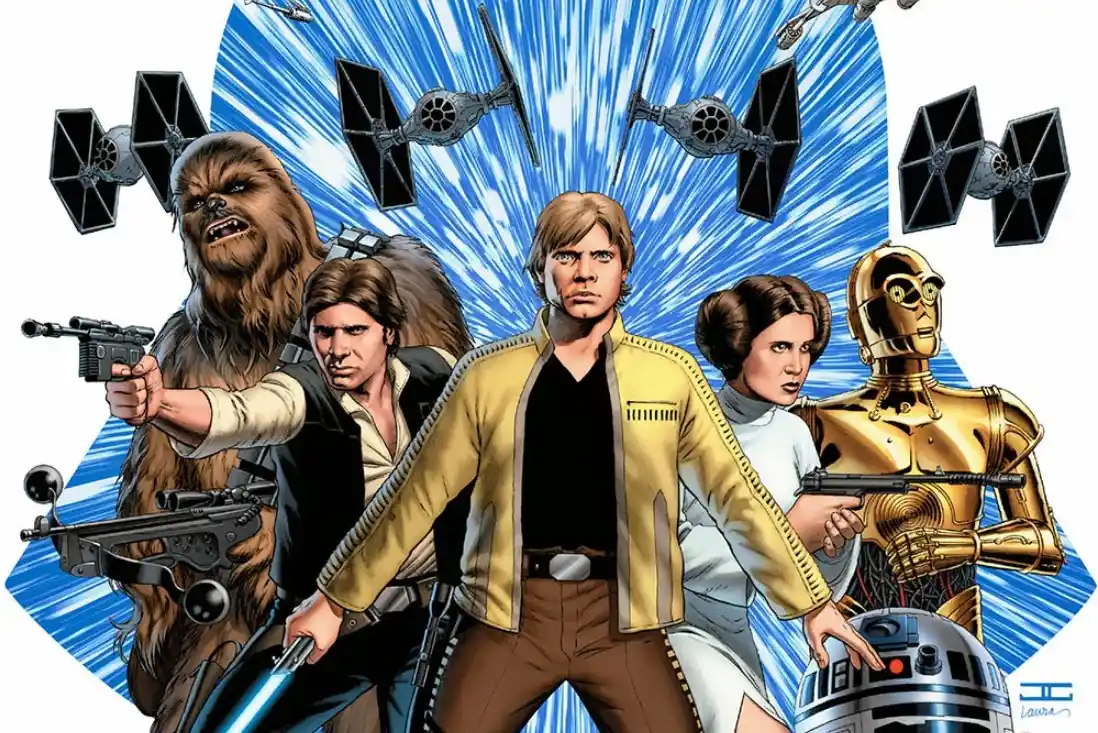
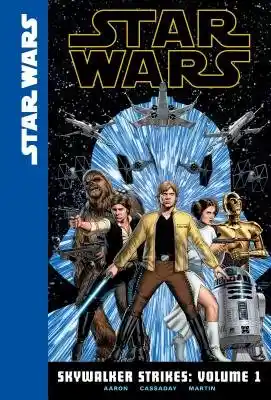
2015 was a year of fresh starts for Star Wars with The Force Awakens kicking off a new era for the film franchise after a long-dormant period. A few months before the movie was released, the expanded universe canon of the series was wiped clean, with almost all media outside of the main films and television show being labeled under the banner “Legends” by Disney. Events within titles under this alternate branding would not be incorporated into the overall lore of the Star Wars universe going forward. While many comic book fans were lamenting the loss of the connective tissue between their favorite off-screen works with the blockbuster films, at the same time they were rewarded with a restarted comic line from Marvel. For new fans this became an easy jumping on point thanks to the streamlined canon. A decade later, reading the collection of canonical comics is almost as convoluted as the Legends line ever was, but the 2015 Star Wars series drawn by John Cassaday and written by Jason Aaron remains an intuitive starting point for modern readers who want to get deep into the franchise.
The events of Skywalker Strikes, the first volume of the rebooted Star Wars series, take place after the first film in the franchise, A New Hope, but the tone is set closer to the more recent Clone Wars animated show. The comic is a grab bag of smash and go scenes, with the focus placed on worldbuilding and character interaction as opposed to an intricate and interconnected plot. Scenes tend to focus on lengthy dialogue, which is used in large part to play with established character dynamics, to various degrees of success. Within the text dumps, there are also lots of lore bits sprinkled in, referencing the current series at the time and planting seeds for the inevitable sprawling expanded universe which would follow this comic. It is a jammed pack comic both in terms of unique action scenes and sheer amount of text. There are points within the series where it feels as though the creative team was scared they would be replaced at any moment, and were cramming in all the ideas they had dreamed up since they were kids. There is a lot of fun in the pages and the team behind the book is talented, but the series is shallow when compared to its contemporaries, such as Darth Maul: Son of Dathomir, a Dark Horse published comic from the same year.
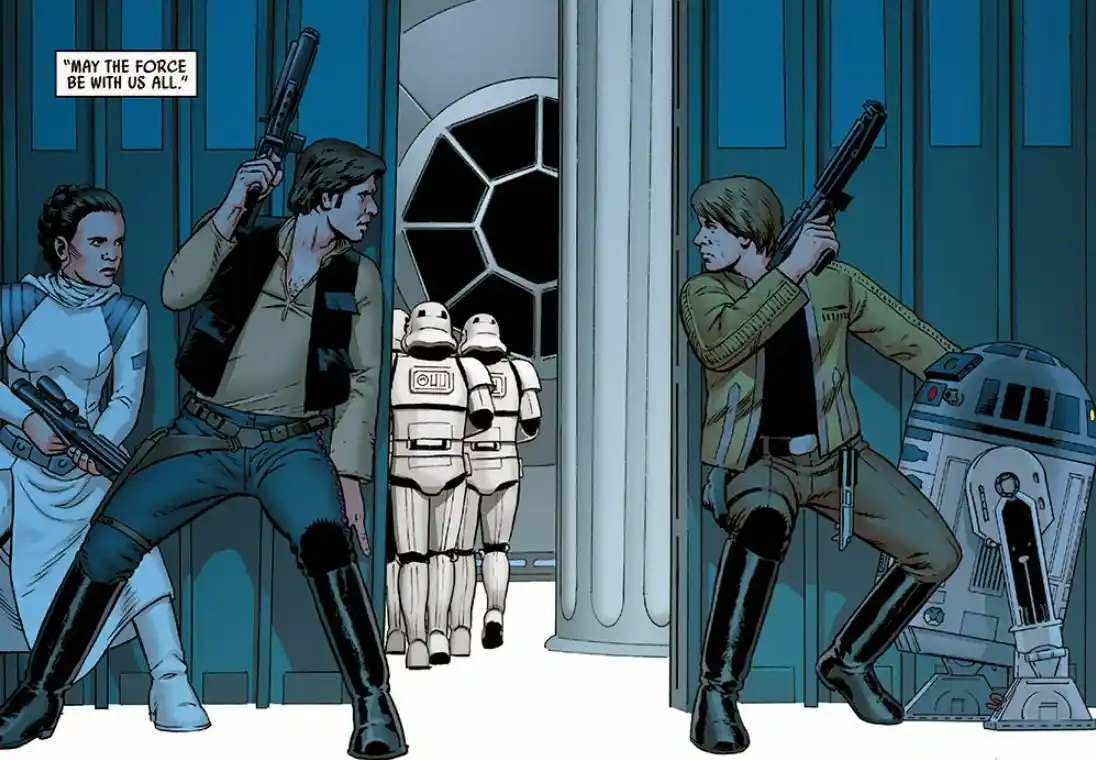
Skywalker Strikes is focused on exploring interactions between the beloved main characters of the original Star Wars trilogy, and as successful as it is at times, that’s about all it is. There are scenes such as one where Han Solo and Princess Leia hijack an AT-AT walker, which would be thrilling to see in live-action, but comes across stilted and fragmented on the page. The continuous action scenes are almost film scene pitches more than intentional comic work. This is not to say that a Star Wars comic book can not be over the top and full of fights and stunts, in fact, they are expected and welcomed. Where this comic goes astray is the full indulging of fan brain, with all of the interactions being between big name favorites, and no grounding or central thrust to connect with readers outside of their previous investment in the franchise. From Boba Fett in a Tatooine bar to melodramatic but inconsequential clashes with Vader, it all has a lot of been there done that energy. Maybe that is a result of the state of the franchise in today’s time, but that is the reading from a modern perspective.
Star Wars media tends to fall into one of two general buckets in regards to scope and ambition. Some works strive to play with the political framework and overall setting in a galaxy far, far away such as the television show Andor. Whether set in eras of crumbling empires or rising republics, the state of galactic politics is crucial to the momentum of the events in the pages or on the screen for certain properties in the franchise. Darth Maul: Son of Dathomir, is a comic example of this, with the dynamics between the people of Dathomir with both the Republic and the Confederacy being integral to the narrative. The second bucket of Star Wars media is the one into which Skywalker Strikes falls, where the focus is on the characters and personalities introduced in the saga. This media comes from the same vein as Obi-Wan, another television show to contrast with Andor, and these stories are focused on the origins of characters, filling out their histories and wiki pages, and injecting fluff lore in between the real narrative.
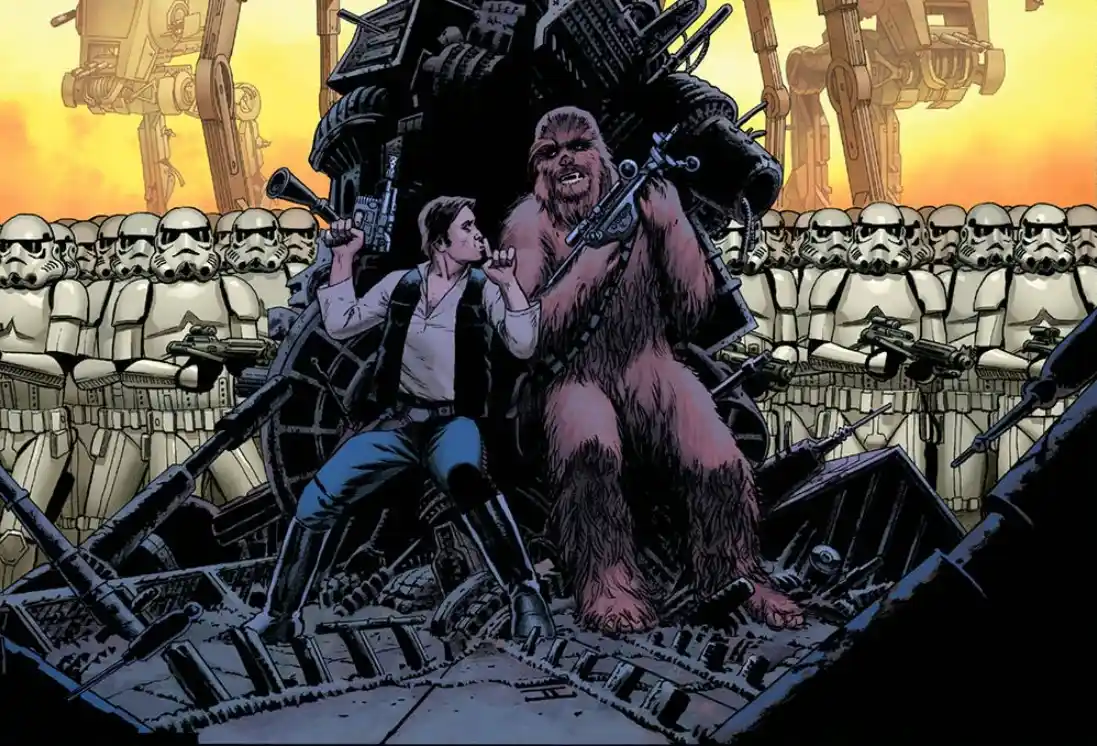
Another example, the movie The Rise of Skywalker would be in the second bucket given the film’s focus on surprising direct familial connections and magic prophecies even while ostensibly large-scale political conflicts take place off to the side. There’s no grounding in what the resistance is fighting for, or what it even means to be a rebel in the given context. The war is set dressing for more crucial dramatic interpersonal conflicts. A good story can come from anywhere, but the second group of media has an inherent barrier in that they cannot begin, conclude, or influence a character’s arc in any way that would impact a more profitable appearance. Anything or anyone introduced to the main cast has to be minimal or have the capacity to be swept away given the conclusions and highlights of their arcs are known quantities.
While Skywalker Strikes can be more of a playground of battle scenes rather than a concentrated story, there are compelling character interactions that will draw in and satisfy some readers. One highlight comes early in the comic when Chewbacca has a clear shot at Darth Vader, and is debating whether or not to pull the trigger with Leia and Han. In this moment, Leia, a prominent leader of the rebellion who recently witnessed the destruction of her home planet, does not hesitate in urging the wookie to try and bring down the sith lord. Bringing the opposite perspective is Han, who sees engaging Vader as a death wish for his friend and a potential obstacle to leaving the planet alive for himself. For his own part, Chewbacca takes little convincing to side with Leia. It is such a good moment and highlights the heart of all three characters, with their personal motivations clashing into each other. However, it is fleeting, and there are not enough of these conversations to prop up the less interesting scenes.
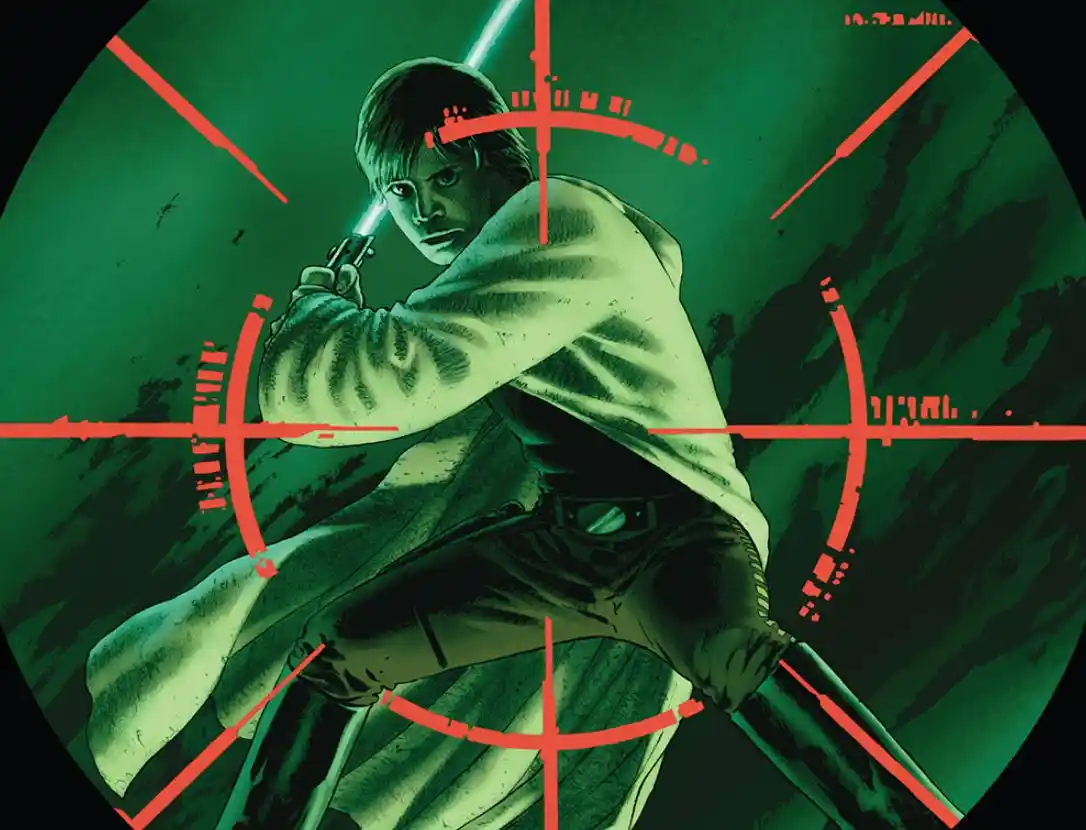
If there is one thing to be said for the first six issues of Star Wars it is a good looking comic. The style is not a huge departure from typical high quality Marvel house style, but there is a bold energy that works well to bring characters from the screen to life in a new way on the page. There are points where the art cannot escape its references and the visual characterizations come across a bit awkward as the reader’s brain contrasts the realistic recreation of famous actors and the comic book action taking place all around them. Overall the art captures the look and feel of the Star Wars universe which has been lost in some of the modern entries in the franchise. Lighthearted and easy to read, there’s nothing offensive about Skywalker Strikes, and diehard fans of the franchise will find plenty to latch on to, but as a discrete package the graphic novel is lacking for readers without a preexisting investment in the universe.
Citation Station
Star Wars: Skywalker Strikes. 2015. Jason Aaron (writer), John Cassaday (penciler, cover artist), Laura Martin (colorist).