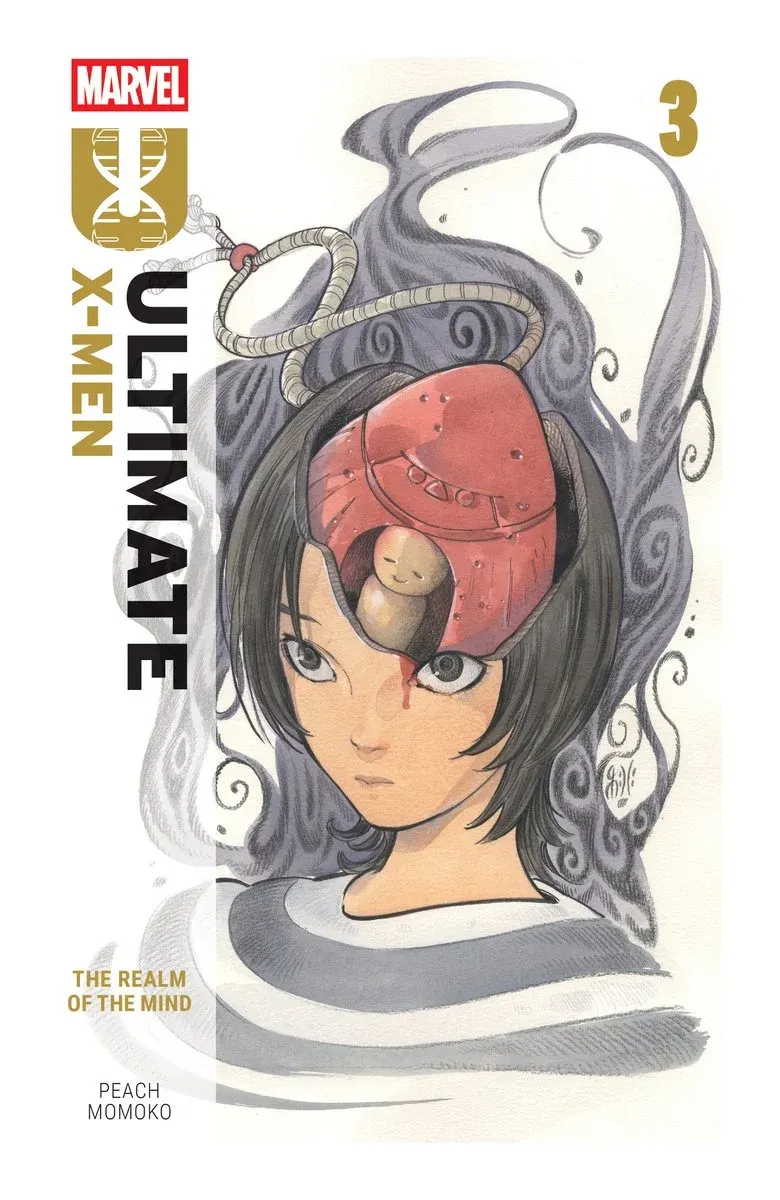
Enter The Realm Of The Mind in Peach Momoko’s Ultimate X-Men
Marvel’s Ultimate Universe

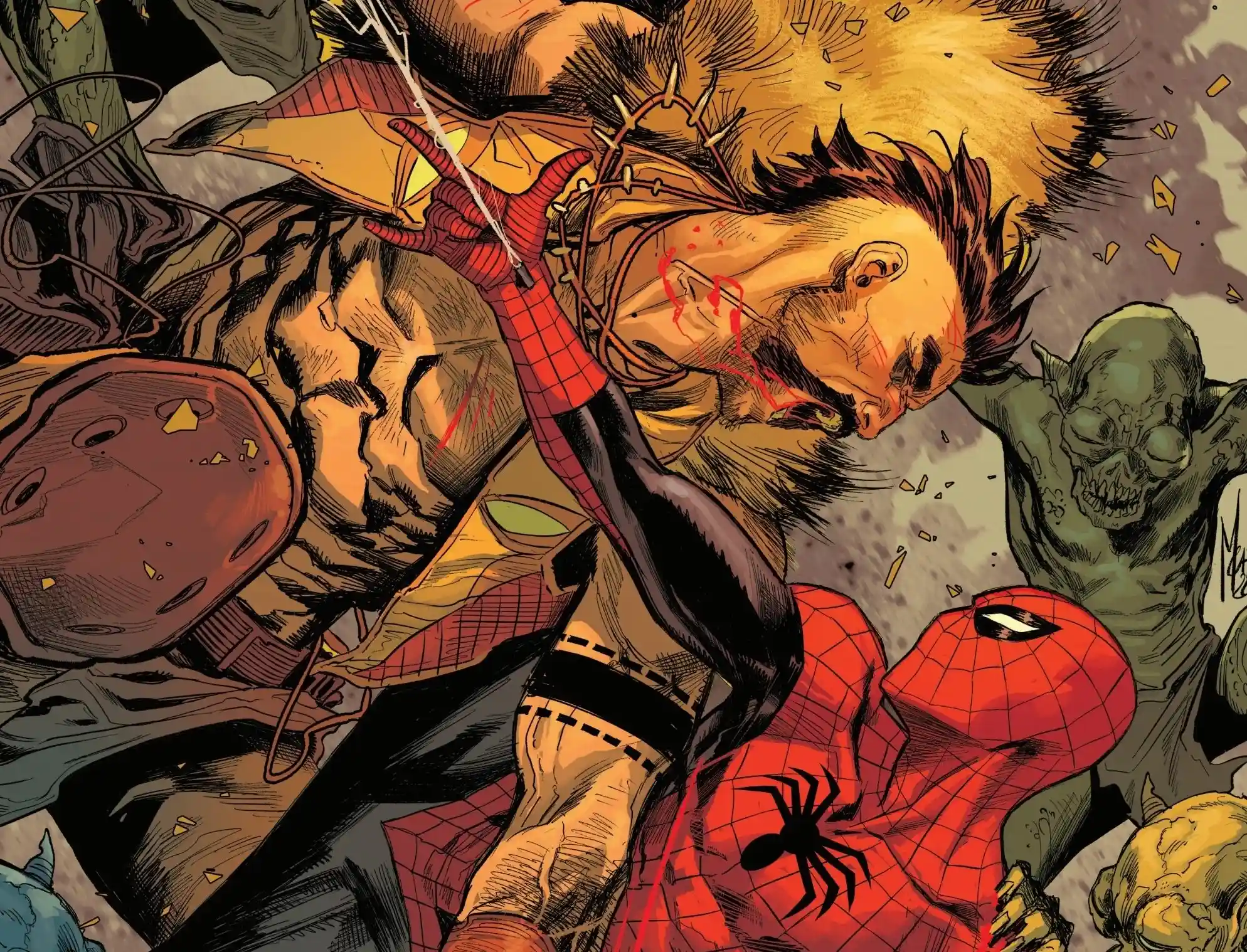
Marvel’s Ultimate Universe is well underway, with the Endgame event on the horizon and two volumes of each of the inaugural series in the rear view. Two of the lines, Ultimates and Black Panther, focus on the broad fallout from the central plotline introduced in Ultimate Invasion, which is a worldwide political shakeup where countries are divided among the nefarious Maker’s Council of powerful fascists. Colonization and resistance are at the heart of these wide-scoped books, and compared to the other two Ultimate series, they are less inclined to play with the idea of a parallel universe, in a creative sense. Ultimates and Black Panther are more often taking advantage of the clean slate to tell particular, individual stories, which may deviate from established canon, but are far from indulging in that aspect. Spider-Man strikes a more casual chord and slots itself into a role that would be expected of a superhero in one of these types of alternate universes. Peter Parker is aged up and given a family, but there are no major deviations from the character’s general motivations or personality. USM is fresh but familiar in the best way, and in many respects, Ultimate X-Men approaches Marvel’s merry mutants in a similar fashion, with an emphasis on the fresh.
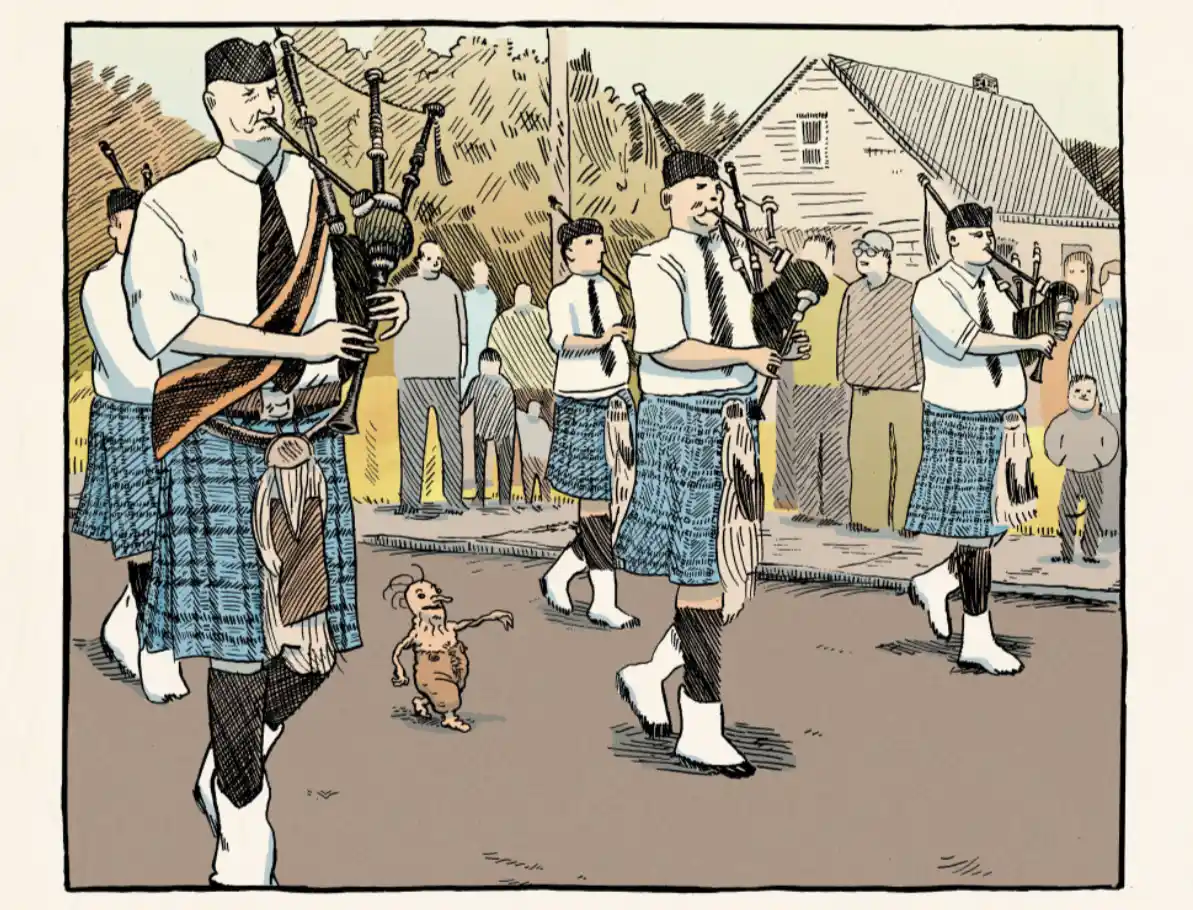
X-Men has always been a team book, with a broad and diverse cast that rotates in and out of the spotlight. The balancing act of telling a story with so many characters is a struggle that writers and artists have dealt with since the era of Chris Claremont, if not back in the Jack and Stan days. In Ultimate X-Men, writer-artist Peach Momoko has decided to accept the challenge of the large cast tradition and commits to packing the comic with original characters. By volume three, there are already two teams of new mutants, with reworked favorites sprinkled throughout. Momoko mimics past X-Men by taking plenty of time with the backstories and initial characterization of each of her mutants.
The origin point for mutants in Marvel comics tends to be the trauma associated with the manifestations of their powers, and this event defines many of the characters’ central or initial conflicts. Ultimate X-Men fits into this exact mold, which establishes a familiar relationship between the cast and their world. While the comic has had a fast-paced plot in the sense that lots happen in a few pages, the series has not been scared to slow down and flesh out connections and motivations at the same time. The result is a well-rounded and deep group of personalities, but until the third volume, there is an argument to be made that the comic has been a bit disparate and slow to get out of the gate or grip readers who were expecting a typical modern superhero affair.
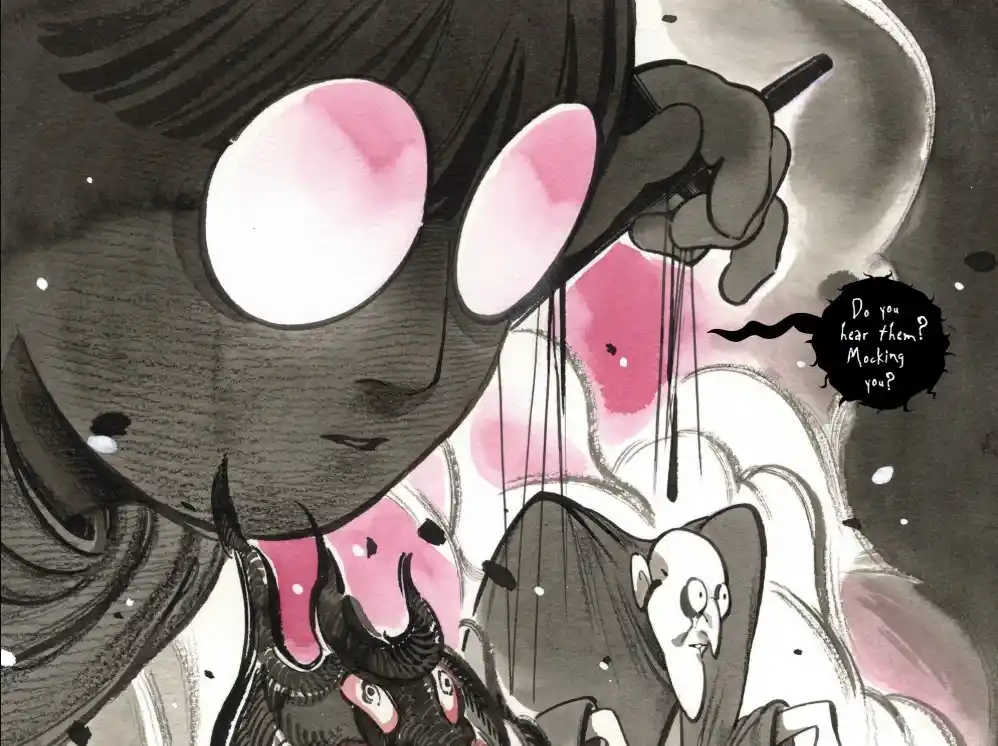
Ultimate X-Men has been a comic full of wit, fantastic art, and new characters, but still felt as though it was on an imposed schedule with the two-year time period that was established in Ultimate Invasion before the Maker re-emerges to enact societal changes. The initial focus on Armor tempered the scramble to introduce a new world of mutants, but the scope has widened far and fast. Throughout the first two volumes, there were frequent moments of narrative whiplash, which kept the pace of the comic fast, but backfired due to the occasional forced flipback to remember who was who. There’s no issue with the bold, individual designs and characterizations of Momoko’s creations, and it is only the quantity of them which can pose a challenge for the reader. By the third volume, though, the characters are established, and readers will feel the book shift gears into a faster, more straightforward narrative, and the change-up is both refreshing and earned to the same degree.
Prior to this volume there was an ambiguity around most characters when they came into play, and there seemed to be mysteries lurking around each corner of the comic. Much like an invasive psychic, Realm of the Mind ends the hiding. The Children of the Atom have been revealed as a shallow play for power, both from the Maker’s Council and Maester himself. The new X-Men group is still coming into form and their philosophies are being developed, but they are entering the public eye and the reader now has enough context and information to really relate and sympathize with the story and the characters, the latter of which is perhaps more important.
Superhero comics are plagued by the imposed expectations and limitations of a creative system in a corporate structure. Characters are restricted from behaving in specific ways, and narratives are shackled by the ever-present need to push profitable properties. Ultimate X-Men is able to avoid the mainstream mandate by relying on characters and a plot that is all its own, while weaving in just enough references to the original series to maintain some sense of continuity between the comic lines. If typical fans of Marvel’s mutants have made it this far into the rebooted series, they will see the familiar atmosphere and character work for which the X-Men comic is renowned. As the third volume in Momoko’s run, the book is reliant on the prior entries and is only able to be as effective as it is thanks to the strong foundation upon which it was built.
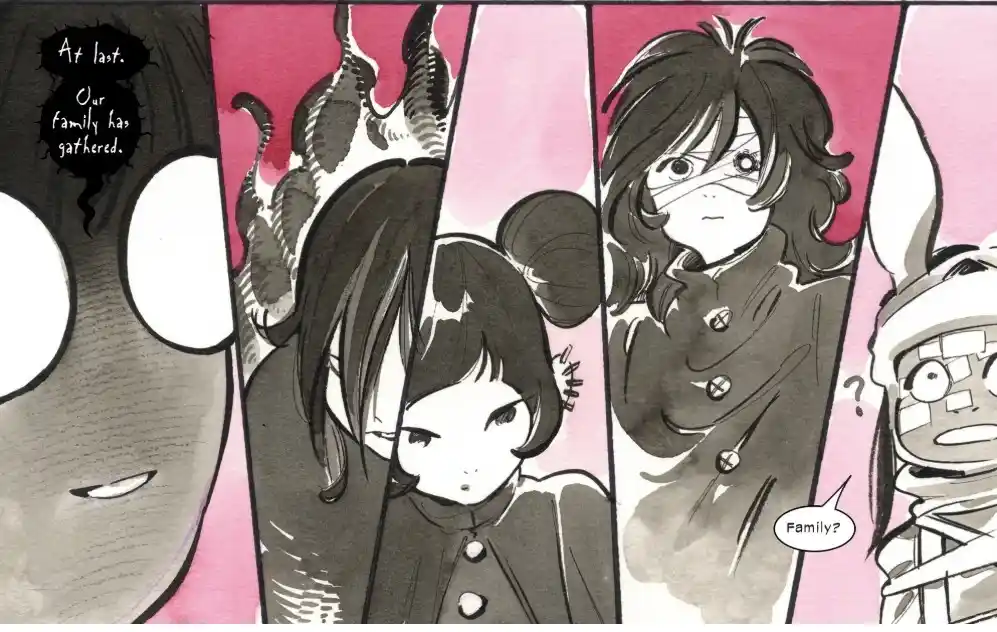
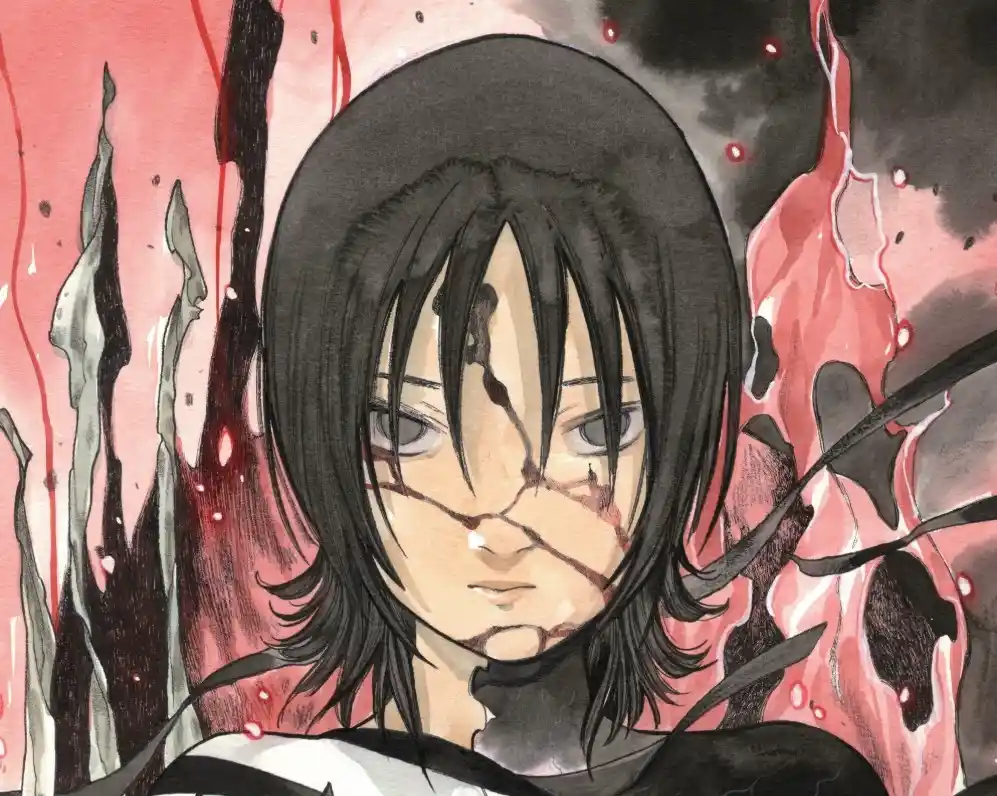
Momoko continues to put out the most interesting and unique art from the publisher. Consistent and high quality, the artist’s grasp on her own characters has only grown stronger, and every panel bursts with personality. The sequences in the astral/psychic realm were a definite highlight, with gorgeous colors and some fun action reminiscent of classic comics, but obviously steeped in a manga influence. In previous volumes, the art made the occasional trade-off in favor of flash and to the detriment of clarity, but Realm Of The Mind does not fall into the same trap and succeeds in walking the line between bold, over-the-top scene choices and those that are grounded and easy to follow.
It is ironic that the most unfortunate aspect of Ultimate X-Men may prove to be the very thing that facilitated its launch, which is the book’s ties to the Ultimate Universe. While the alternate universe allows the writers to operate free of baggage, the new characters and groups introduced by Momoko would work just as well in the main line as a narrative that is divorced from the typical stars. The book’s alternate spins on favorite heroes are novel and probably do captivate some portion of the readership, but they are far from the essential foundation and heart of the series. In addition, the planned timeline of the Ultimate Universe facilitates UXM’s run length, which is quite long relative to many modern counterparts. The narrative does not tie into the broad story of the universe in a substantial way. Links between the wider world exist within the story, and they work just fine to establish the series’ place in the line, but they are not interesting or integral. There’s a potential for a misstep if the larger events of Ultimates, Spider-Man, and Black Panther take precedence in the climax of X-Men’s run without earning it. With the other books focusing on massive corporations and political entities, there is a stronger framework for seamless crossover. UXM’s world is so separate from the others, with its strengths lying in its intimacy and scale, it would be a shame for the book’s story to get swept up in the plans of others. There is something to be said for the overall quality of a book that has set itself such a high bar. So far, Momoko and company have been able to clear the high standards, and as long as they are given enough space, there seems to be little reason to doubt their future success.
Citation Station
Ultimate X-Men Volume Three: Realm Of The Mind. 2025. Peach Momoko (author, illustrator, cover art), Zach Davisson (author).