Darth Maul: Son of Dathomir is the Awkward Rebirth of Star Wars Comics
Star Wars

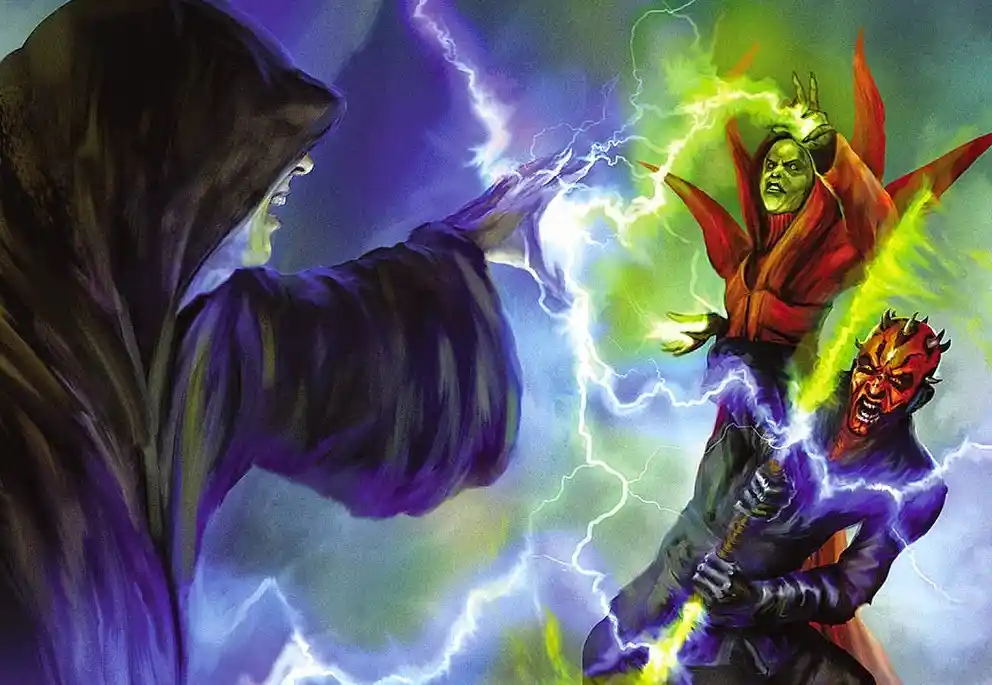
The year was 2014, and the landscape of the Star Wars property, the comics in particular, had never been more unstable. Coming down the pipeline after the Disney acquisition of the brand was the official delineation of past expanded universe material as non-canon, with the movies and other premiere products being the only remaining lore to which future projects in the universe would be bound. The shake-up went hand in hand with the transfer of Star Wars comics from Dark Horse to the Disney-owned Marvel. From that point on, the only canon Star Wars books would be those coming from the House of Ideas. Except for one comic. By a weird quirk of fate, Darth Maul: Son of Dathomir, published by Dark Horse, would become the inaugural entry in the new Disney-Star Wars comic book line.
In short, the story behind Son of Dathomir is an unrealized script for the Clone Wars animated television series, which revolves around Darth Maul and his titular home planet. The origin of the narrative means that the comic is synced up with the canon show, and outlines events in the way they are assumed to have happened off-screen. According to the voice actor for Darth Maul, Sam Witwer, Star Wars bigwigs George Lucas and Dave Filoni both consider the comic canon, and for that reason Witwer read it in preparation for his work with the character (SW Holocron - Blog, 2020).
The basis for Son of Dathomir is simple: Palpatine/Darth Sidious wants to take a shot at Mother Talzin, a Dathomir (the home world of Maul) leader who possesses powers and influence that are a threat to one seeking universe domination. As he is playing both sides, native populations that stand independent from the Republic and the Confederacy are of particular danger to the plans of Sidious. The dynamic of small but formidable third parties in the Clone Wars is in and of itself interesting, as it immediately creates nuance on both sides and allows for plenty of areas to tell stories that, while compelling, might not be crucial to the future of the galaxy as a whole. This particular instance also includes the intricate personal dramas that tie together the lives of Sidious, Maul, Dooku, and Talzin.
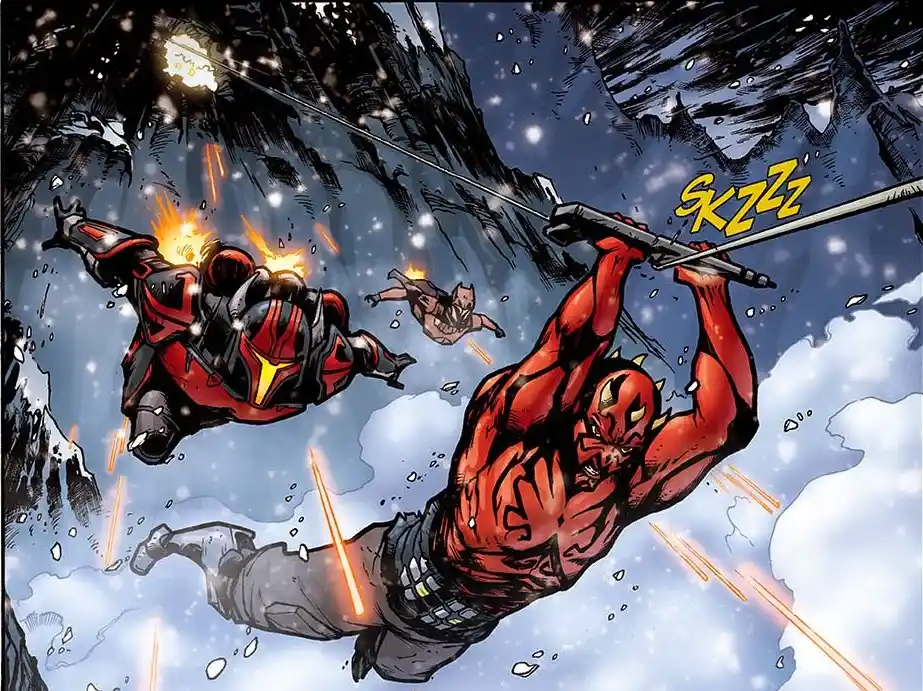
A prison break starts the series and works to both hook the readers and provide room to establish the current landscape and moment within the Star Wars galaxy in which the story exists. Maul is introduced as an ousted Sith who leads an army of mercenary Mandalorians. Their band of fighters is separate from the Confederacy and the Republic, with no love lost between either. From his time being interrogated and subsequent escape, Maul is shown to be a slick, chaotic neutral type character, who is oriented as much in personality as visual design for the demographic of young men and boys. Recasting Maul into a protagonist works surprisingly well, with his sins forgivable and good deeds tragic, given his assumed death prior to A New Hope. Not to mention the Maul-themed Mandalorians are the peak of over-designed action figure pitches, and they rule.
After Maul’s flight from the Sith, the rest of the book becomes a series of chases and battles between three factions of the Jedi and the Republic, Sith and the Confederacy, and Maul plus his sympathizers. Sidious reveals his plans to draw out Talzin and take her out, with Maul and Talzin herself hatching their own schemes at the same time. Obi-Wan, Mace Windu, and a couple of other Jedi make appearances, but their inclusion feels as though it was an obligation, and they don’t add much to the narrative other than the critical role in forcing Dooku and Maul into a tentative, temporary alliance.
A web of relationships grows between Maul, Sidious, Talzin, Dooku, and, to a certain extent, Grievous. Son of Dathomir is a short series, and these characters have established histories and futures, but the story is able to play the five characters off each other in a way that creates sympathy for these otherwise monstrous individuals. Resentment between Dooku, Grievous, and Maul, as they each see themselves as the true right-hand man of Sidious, connects them and forces them to realize there are others they could relate to in some way, a truth they all wish they could ignore. Each of the main characters offers alliances and apprenticeships to each other regardless of the leverage or skill they actually possess, with their own ambitions constantly keeping them on edge and clouded in judgment. The messy dynamics lose meaning and substance at points, but the emotion never wavers, and the melodrama is really just fun.
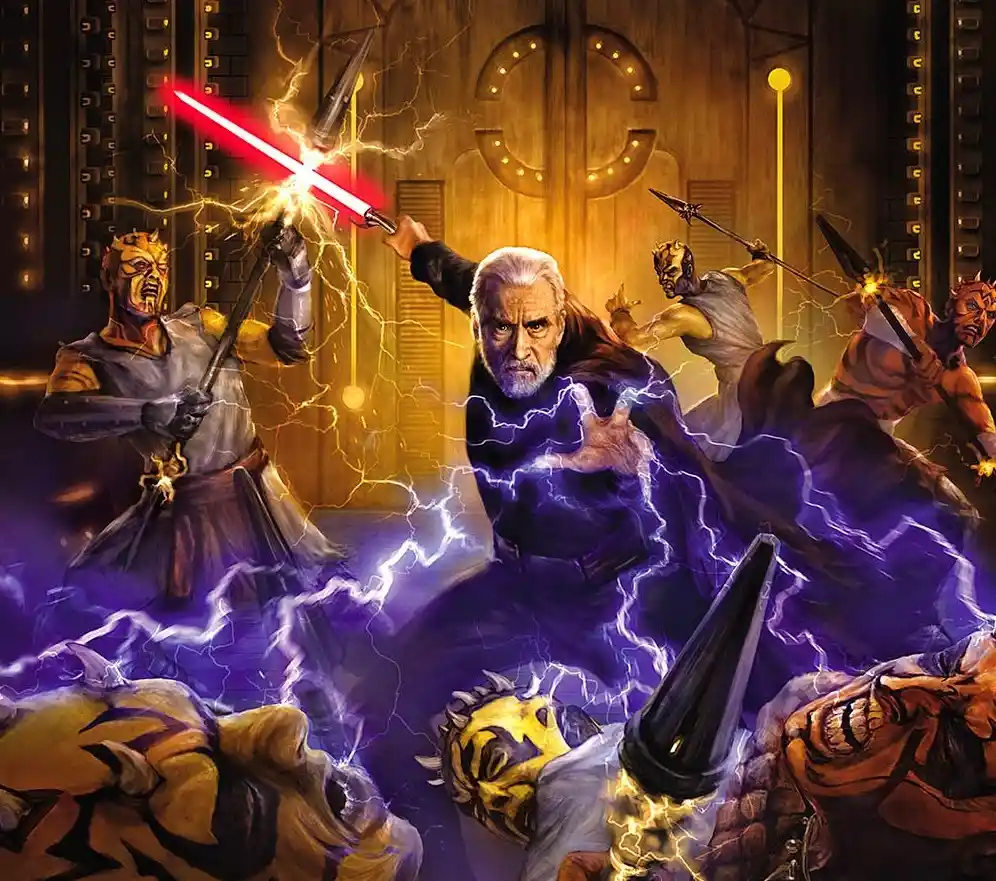
Son of Dathomir can’t escape its origins, with the straightforward plot, character designs, and even action scene direction all mimicking the animated series. The art is well done, the story makes sense, with some flourishes that elevate both, but the translations of on-screen elements result in a stilted, generic page-to-page experience. The adaptations' failings are most evident in weightless fight scenes and boring panel compositions, which do nothing to support the often otherwise exciting content. There’s nothing offensive about any of the art choices, but there’s no innovation at the same time, with dramatic duels and wit-filled one-liners that are diminished on the basis that they’ve been done before in better forms within other Star Wars media. The worst criticism that can be leveled at the book is that it has a good chance of prompting the reader to wonder why they are reading the comic at all, when it so clearly wants to be an animation. This is no fault of the actual art quality, as Juan Frigeri is putting out excellent work, but it is more the scope of the scenes and the type of action moments that are chosen, which feel at odds with the interests of the medium.
While there is a reason for well-trod ground, this limited series relies too much on tropes and known quantities from the wider universe. The rivalry between Dooku and Grievous, Palpatine’s willingness to betray anyone, Dathomir as a planet, and even Obi-Wan’s conflict over personal attachments to the people of Mandalore, are all explored in other media to greater effect. The captivating force of the series is the dichotomy between an independent local power and a bigger war with no good side, but it is a theme that is near-exhausted in its abundance across Star Wars properties.
A quirk of a series, Darth Maul: Son of Dathomir, comes out far closer to good than great. Unable to escape its own genesis, the book is competent but tainted with thoughts of what could have been. The series is not perfect for a newcomer, but it does give a glimpse of the types of personalities and hierarchies that fuel Star Wars. An easy, fun read that has more to say in the setup than within the actual pages, there are far worse ways to start a comic book universe.
Citation Station
Darth Maul: Son of Dathomir, 2014, Dark Horse Comics. Jeremy Barlow (writer), Juan Frigeri (penciller), Mauro Vargas (inker), Michael Heisler (letterer), Wes Dzioba (colorist), Chris Scalf (cover artist).