Resist Multiversal Colonization with Deniz Camp’s Ultimates: Fix The World
Marvel’s Ultimate Universe

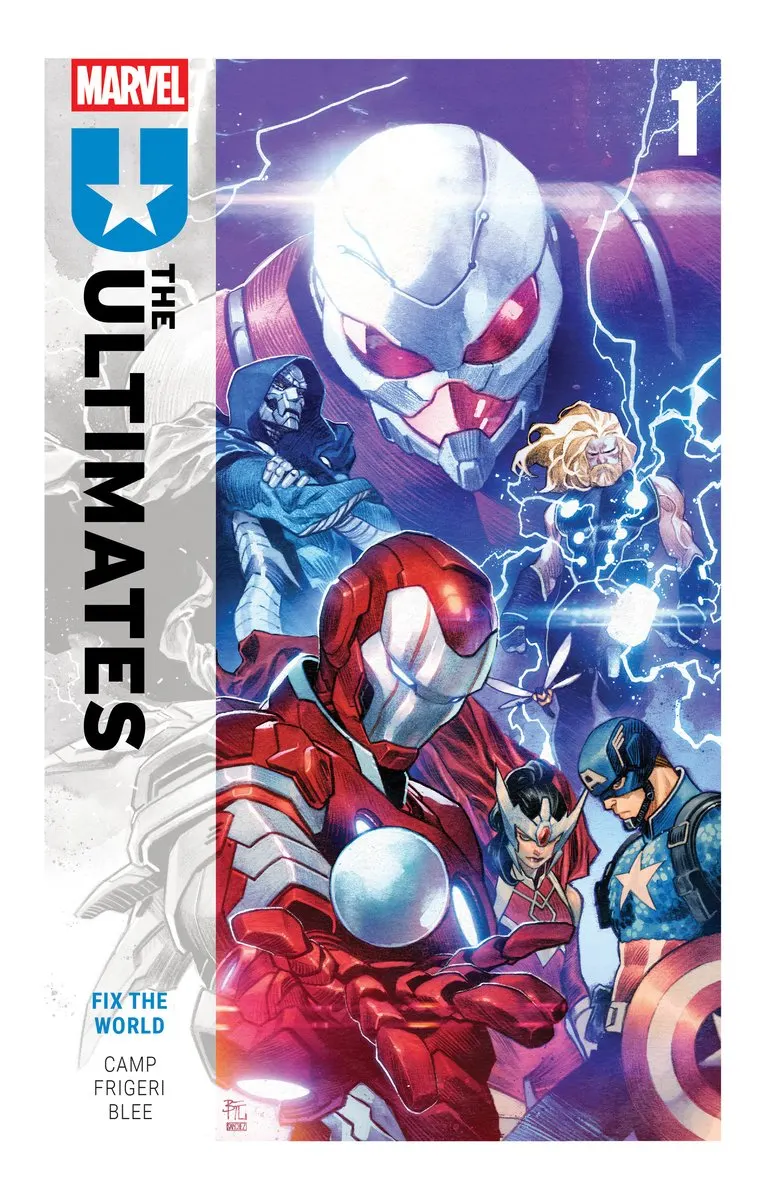
A direct continuation of the events in Ultimate Invasion and the ostensible centerpiece for Marvel’s newest universe, Deniz Camp’s Ultimates is a necessary read for anyone invested in the Ultimate line of comics. The book focuses on an alternate version of Marvel’s headline team, The Avengers, known as the Ultimates. A recruitment focused series for the first six issues, the book is centered around introducing the new team and their associated motivations. Formulaic pacing and a simple issue structure hold the comic back, but bold thematic decisions and strong character voices help push the title higher in quality.
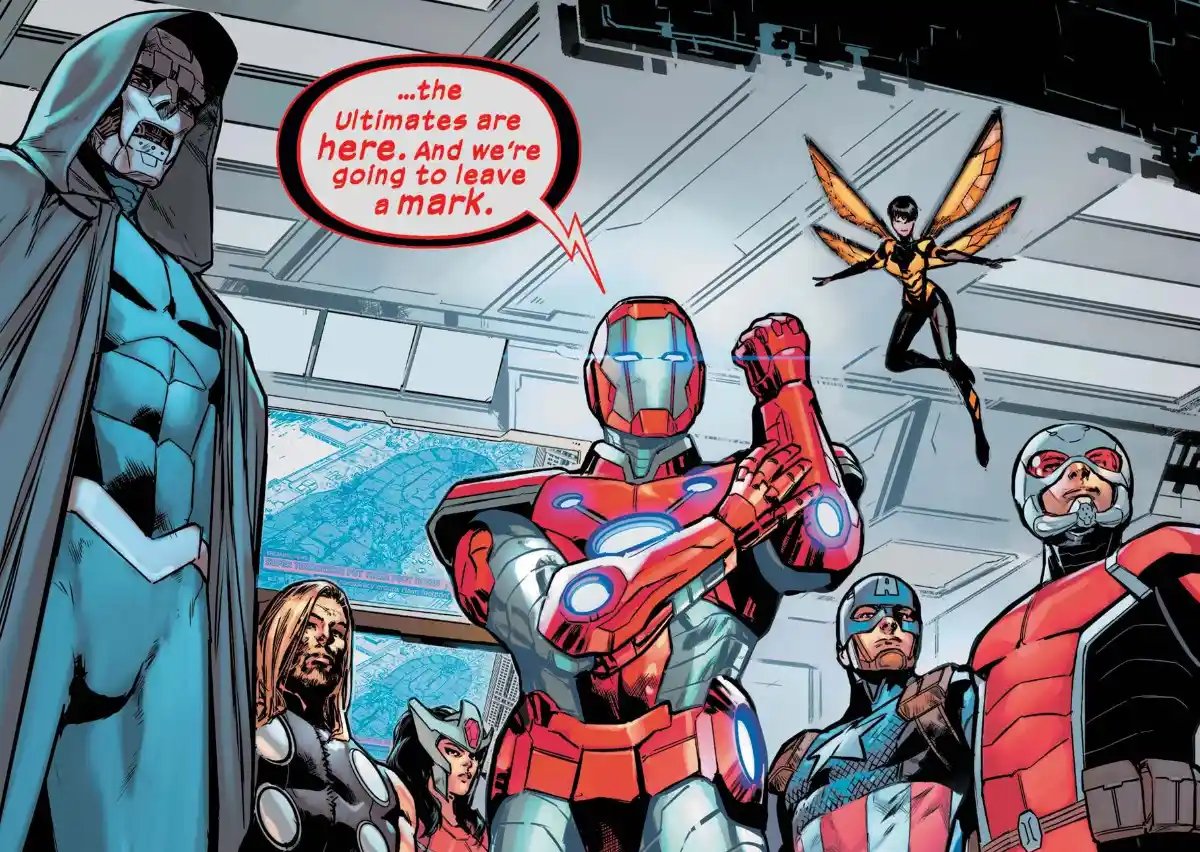
Relative to the other books in the line, the Ultimates is the most concerned with the events that incited the alternate universe’s creation, within the Ultimate Invasion limited series. It is in these pages that readers see Iron Lad and Doom build an alternate Avengers team to prepare for The Maker’s expected emergence from the City in two years. The book hinges on the armored duo being able to access knowledge of the main Marvel timeline, and their efforts to leverage said information are at the core of the comic.
Readers see Iron Lad and Doom standing before oversized monitors that depict classic comic representations of the main universe. Peering into this alternate timeline allows the protagonists to assess the differences spurred on by The Maker and debate the strategies to convert their world into the brighter version. The setup is meta and proud, with the duo’s conversation becoming reminiscent of a publishing plan. Subsequent issues stick to a standard outline of recruiting team members while highlighting distinct settings and political situations on the Ultimate earth.
The Ultimates is dedicated to the serialized distribution method, to the detriment of the collected edition. Each issue employs a similar format, featuring an ongoing battle or mission interspersed with world history and character background, culminating in a reluctant hero joining the team. The formula is so apparent when reading the six issues together that it is borderline unavoidable to pick up on. There is no time for much of anything to breathe, the issues feel both repetitive and disparate until the end of the volume. Suspension of disbelief and immersion are both sacrificed as the reader sees plot elements move and arrange themselves behind a thin veil. Thankfully, the talents of the associated creators are not lost in the algorithmic format, and the moment to moment experience remains enjoyable.
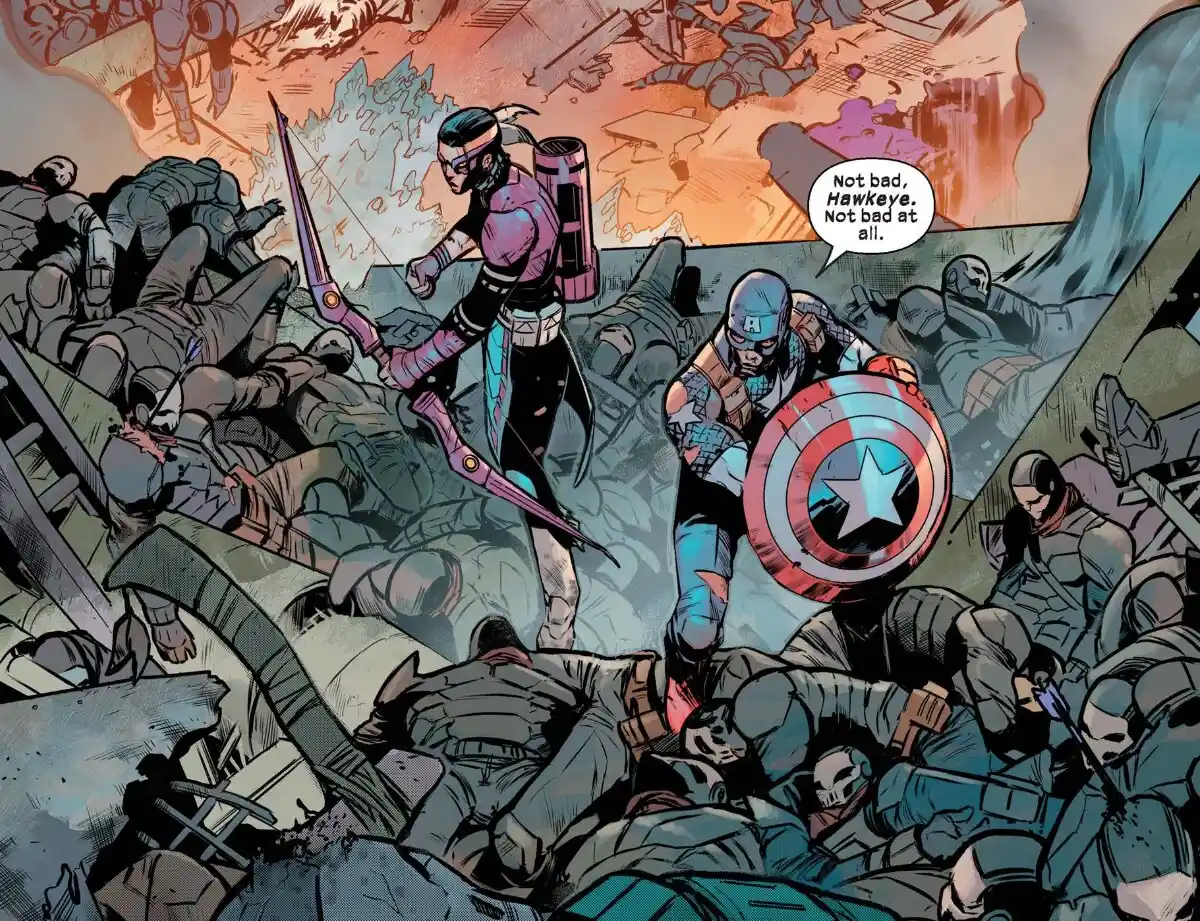
Each issue of the volume is a breeze, borders on self-contained, and introduces at least one or two interesting elements. Perhaps the smartest overarching creative move is the decision not to lean into the weird pseudo-genetics hero score idea that Iron Lad initially pursues. There are such limits and logic jumps that are forced to happen when superhero identities are tied to specific individuals, as was the case in Marvel’s original Ultimate universe. It seems clear that the new universe is taking a deliberate step in another, more interesting direction. The construction of the new world allows constants such as Steve Rogers/Captain America to persist, while providing plenty of space for new characters in the form of Charli Ramsey/Hawkeye and Lejori Joena Zakaria/She-Hulk.
Keeping in the vein of the previous series’s ‘Invasion’ title, Fix The World explores the concept of outsiders, corruption, and power. Readers see Captain America deal with a USA that has fallen, and is being wielded in direct opposition to what he views as the country’s values. She-Hulk and Hawkeye hammer home the theme of colonization with a mix of real-world and fictional atrocities that reflect patterns of oppression and exploitation. Labeling the team as terrorists even further pushes the book into areas that could prove provocative. Yet to be seen, though, is whether or not the series will have anything of weight to say about the aesthetics it has draped around itself. The final issue of the first volume, a battle with The Hulk, is compelling and fun, but showcases the potential to flatten and lose the series' heavier ideas within the typical good versus evil structure of superhero comic books. As an opener, Fix The World does a commendable job of setting the stage, but its work will only be worth as much as the highs of the follow through.
From a further removed perspective, the Ultimates is less a book about building a team and more one focused on greater world events. Scope is varied throughout the Ultimate Universe, with a loose interpretation being that the Spider-Man series is focused on one man, X-Men is centered on a group, Black Panther on a country, and Ultimates is the closest to the whole, zoomed out picture. Fix The World hops around the globe, and it's the reception and reaction to the team that provide context for the consequences and perceptions of the high-flying superhero events from the people at ground level. The book presents strong cases for the likes of Hawkeye and She-Hulk to resist The Maker, not just because he has invaded their specific universe, but because his attempts to transform the world to match his vision reflect horrific events with which they are personally familiar.
There is a mismatch between the layered, political topics the book touches upon and the action forward, paint by numbers format in which it presents them. The story feels broader than the release schedule and format allow, additionally, the bottling of each chapter results in obvious repetition. Bolstering the volume is a detailed world, alive and rich in history, alongside strong characters with interconnected driving forces. A solid foundation is built into both the personality and makeup of the Ultimates roster, with each member being modern and relatable to the average reader. The question that remains unanswered is how the series will execute on the stage setting done in these pages. It is interesting as these issues seem to be concerned with the overarching Ultimate Universe story, while not being penned by the architect of the line, Jonathan Hickman. Hickman’s latest and largest swings at Marvel, with X-Men in 2019 and G.O.D.S. in 2023, do not inspire hope in the author and publisher reaching success beyond a first act. Fix The World is a well-made comic, but whether it is worth investing time in will be decided to a substantial degree by subsequent volumes.
Citation Station
Ultimates: Fix The World. Deniz Camp (writer), Juan Frigeri (penciler), Phil Noto (penciler), Chris Allen (penciler), Dike Ruan (cover artist). 2024.