Attaboy: A Comic About Androids, Nostalgia, And That One Obscure Video Game Your Mom Got You That One Time
Indie Thing Under the Sun

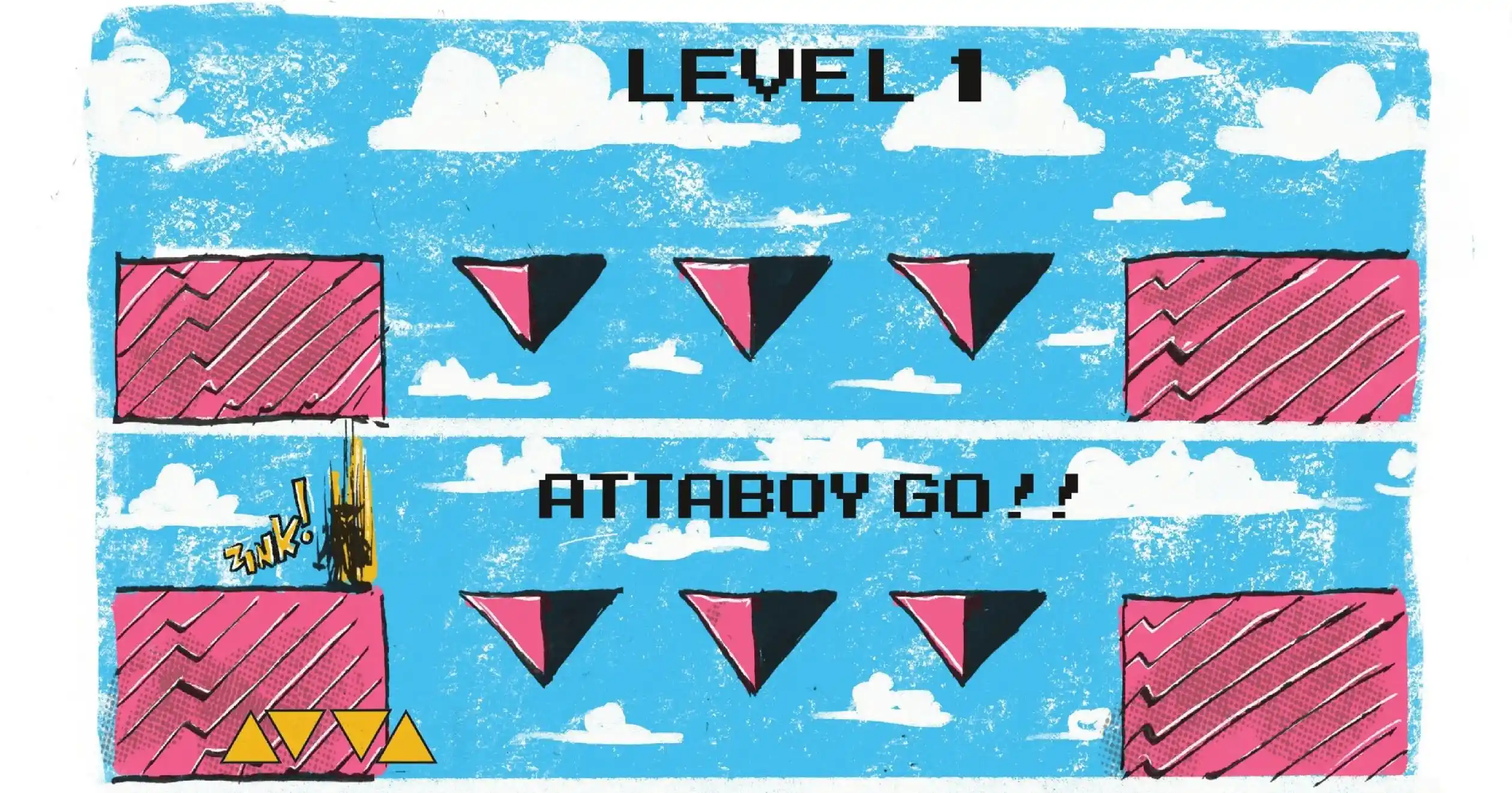
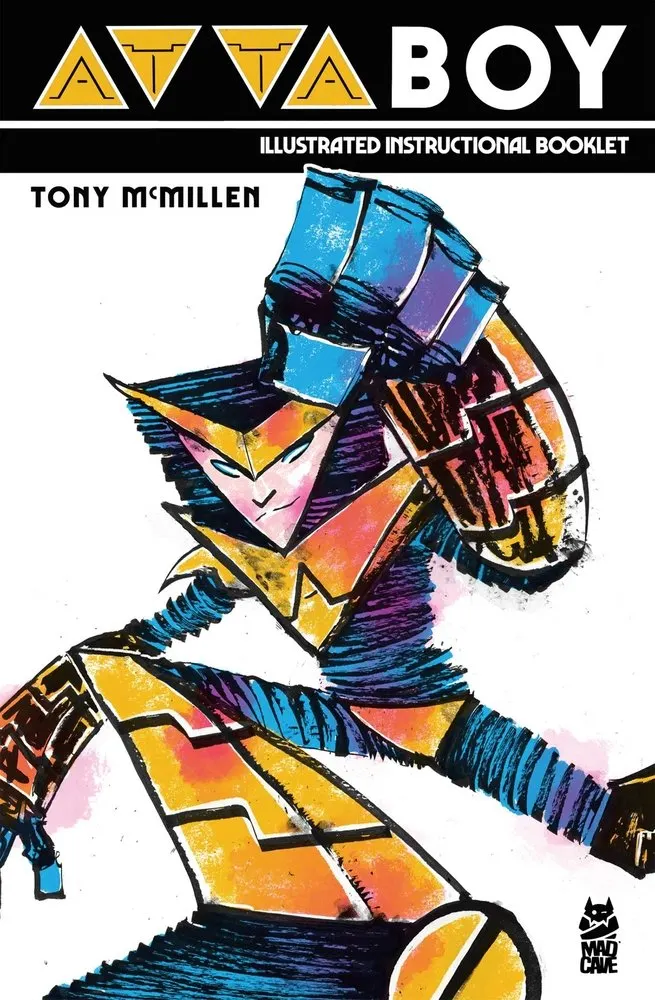
Sold as a video game manual turned graphic novel, Attaboy by Tony McMillen proves more interesting than its already peculiar conceit. The facade of being an instruction booklet is shed soon after being introduced, and the majority of the comic focuses on completing the game. Stylized as a game reminiscent of Mega-Man, Attaboy is introduced as lost media, a remnant of the past discarded and disregarded to the extent that almost nobody even retains memories of its existence. The comic hurdles forward as the narrator tries to remind the reader of this long forgotten childhood relic, but as the book delves further into the game, memories of more than just video games rise to the surface.
The key to Attaboy is how the book presents a simple concept from an angle that creates a facade of complexity. There is an implied secret at the heart of the game, something off or supernatural, which would explain the loss of its legacy or reveal an elusive true ending, which the narrator could never achieve in their childhood attempts. The reader is regaled with descriptions of the stages, upgrades, and enemies of the Attaboy game, but even upon reaching the credits, the narrator never felt as though they had found the real conclusion. The graphic novel is a spiral of recollection, as the past events emerge from their repressed haze and the hidden nature of the game is brought to light.
After touching on the ubiquitous elements of video game manuals in the forms of descriptions of characters and movesets, as well as basic story background, the graphic novel underpins itself with other video game concepts. The subgenres of roguelike and roguelite video games refer to those that involve engaging in a gameplay loop that emphasizes repetition. Players attempt to complete dungeons or objectives over and over, and each cycle produces new knowledge or upgrades to help the next run be more successful. As Attaboy unfolds, the game reveals itself to be reminiscent of the roguelike subgenre, with the “true” ending only becoming accessible after completing the game multiple times and utilizing knowledge and experience gained from past playthroughs. In many ways, it is just a small structural story decision, but in practice, the continued inclusion of video game concepts helps preserve the nostalgia and tone that initially hooks the reader.
Attaboy establishes a straightforward connection between the video game the narrator played as a child, and the tumultuous events, and his parents’ divorce in particular, that happened to him as a kid at the same time. Direct reflections of trauma seep into memories of the game and begin to usurp the long lost manual conceit. The handoff between concepts is bolstered and seamless by the commitment to indulging in video game elements such as gameplay loops and false endings. There is a palpable shift as the reader starts to question what is reality and what is a false memory fueled fantasy. Explorations of vilification, family, and life are all underpinned by the cohesive, consistent theming and straightforward, nostalgic angst. The result is an intriguing narrative with depth that most graphic novels of the same slim size lack.
There is another revelation around Attaboy. Despite a strong, compelling narrative, the graphic novel’s story is outpaced and outshone by the spectacle of its art. The lines shake, and the streaked outlines are but suggestions for the explosion of color that adorns the page. Reminiscent of retro comics books and video games alike, the colors are bright and full of sharp contrasts. The final product is a retro future style that invokes the memory of an old video game and manual, while being more cohesive and well composed than almost any of those the book emulates. To experience Attaboy without reading any of the words would be incomprehensible, but it would be enjoyable all the same.
Attaboy is a comic that knows how to keep a steady pace and not overstay its welcome. With a story that pushes the reader to keep the pages turning and art that demands to be appreciated, there is no dull moment.
Citation Station
Attaboy. McMillen, Tony. 2024.